File:Operative gynecology - (1906) (14596788980).jpg
Original file (2,032 × 1,392 pixels, file size: 701 KB, MIME type: image/jpeg)
Summary[edit]
| Summary | |
|---|---|
| Description | Identifier: operativegynecol001kell (find matches)
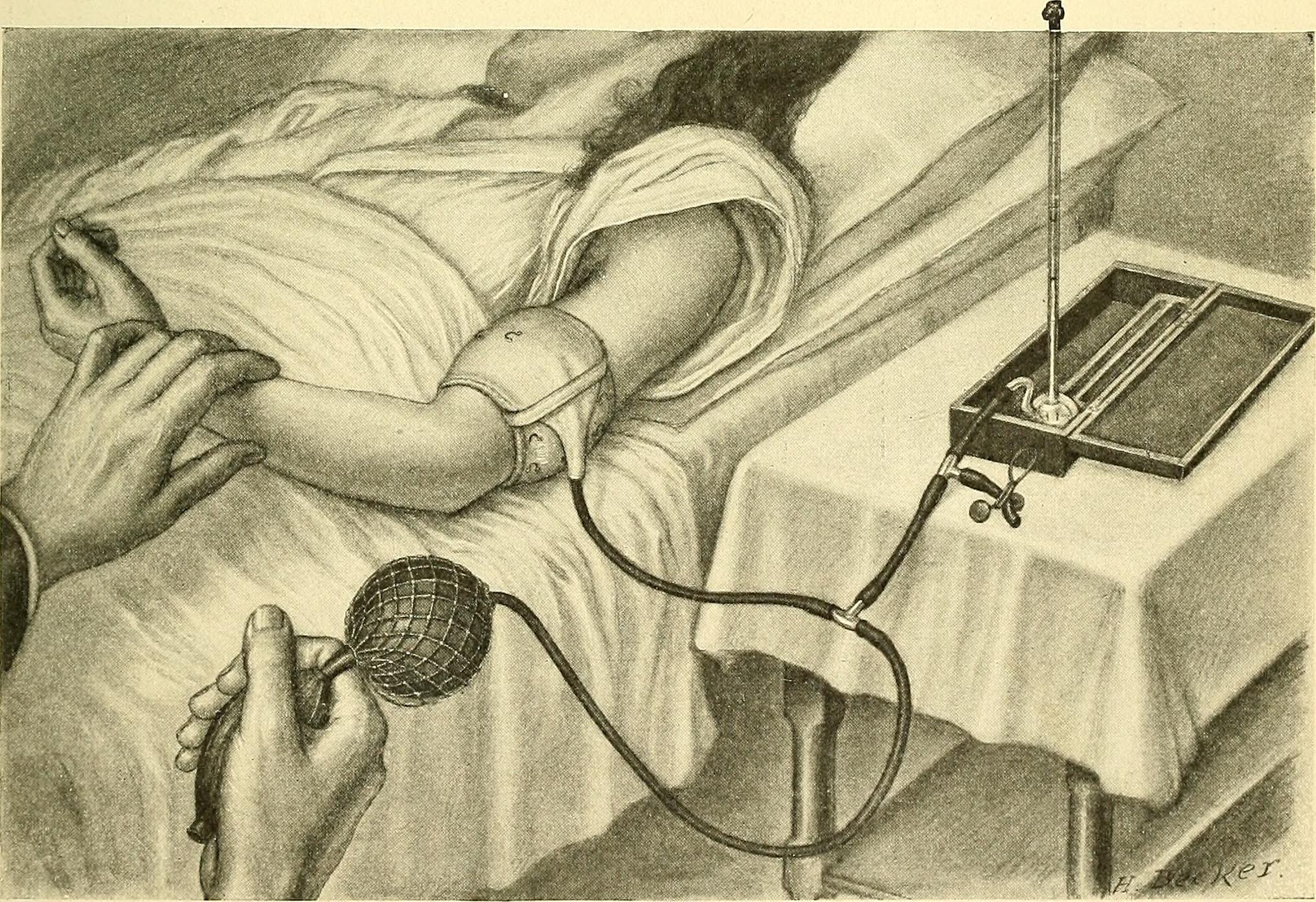
Title: Operative gynecology : Year: 1906 (1900s) Authors: Kelly, Howard A. (Howard Atwood), 1858-1943 Subjects: Gynecology Gynecology Gynecologic Surgical Procedures Publisher: New York and London : D. Appleton and company Contributing Library: Francis A. Countway Library of Medicine Digitizing Sponsor: Open Knowledge Commons and Harvard Medical School View Book Page: Book Viewer About This Book: Catalog Entry View All Images: All Images From Book Click here to view book online to see this illustration in context in a browseable online version of this book. Text Appearing Before Image: e an inverse measure ofpulse strength, but this is a rough and uncertain guide and misleads in manyinstances. A small rapid pulse almost invariably gives the impression ofweakness, whereas it may be much above normal strength, and a slow pulsewith a large wave often feels much stronger than it is in reality. Practicalinstruments for clinical use which measure blood pressure accurately add ampst valuable element in recognizing and correcting dangerous changes inthe patients general condition during operative procedures. In those caseswhere the preliminary examination has demonstrated a weak, hypertrophied,or diseased heart or other cardio-vascular abnormality; or where the intendedoperation is of such serious nature as to make excessive hemorrhage, shock,or undue heart strain probable, a careful record of the patients blood pressurebefore, during, and after operation will afford a most valuable control uponthe general condition, and often be the means of an early recognition of danger. Text Appearing After Image: Fig. 102.—Apparatus for determining Blood Pressure. Fig. 102 shows the sphygmomanometer in position. When used duringanesthesia the arm is stretched out to the side on a level with the head andrests upon the table, so as not to interfere with the field of operation. The 194 ANESTHESIA. apparatus consists essentially of three parts connected by rubber tubing: (1)A constricting, hollow rubber band, fitting snugly around the patients upperarm; (2) a mercury manometer; (3) rubber bulb with valve attachments forinflating the arm piece. The pressure is raised in the arm piece until thepatients pulse is obliterated, the point of obliteration approximately repre-senting the normal arterial blood pressure. The amount of this pressure isindicated by the mercury manometer. The effect of anesthesia and operative manipulation upon blood pres-sure is shown in the accompanying chart (see Fig. 103). The blood pressureduring the operation after the stage of complete relaxation is usually slightlyabo Note About Images Please note that these images are extracted from scanned page images that may have been digitally enhanced for readability - coloration and appearance of these illustrations may not perfectly resemble the original work. |
| Source | Wikimedia Commons file page |
| Author | Internet Archive Book Images |
| Permission | See original Commons license details. |
Licensing[edit]
License: No restrictions
License page: No restrictions
Original attribution and file history: Wikimedia Commons
File history
Click on a date/time to view the file as it appeared at that time.
| Date/Time | Thumbnail | Dimensions | User | Comment | |
|---|---|---|---|---|---|
| current | 03:23, 5 June 2026 | | 2,032 × 1,392 (701 KB) | Maintenance script (talk | contribs) | == Summary == Importing file |
You cannot overwrite this file.
File usage
The following page uses this file:


_(14596788980).jpg&action=edit§ion=1)
_(14596788980).jpg)
_(14596788980).jpg&action=edit§ion=2)
_(14596788980).jpg&oldid=6591727)