Europe


Europe is one of the seven traditional continents, located entirely in the Northern Hemisphere and mostly in the Eastern Hemisphere. It constitutes the western portion of the Eurasian landmass and is geographically bordered by:
- The Arctic Ocean to the north
- The Atlantic Ocean to the west
- The Mediterranean Sea to the south
- Asia to the east
The commonly accepted boundary between Europe and Asia includes the Ural Mountains, Ural River, Caspian Sea, Greater Caucasus mountain range, Black Sea, and the Turkish Straits (the Bosporus and Dardanelles).
Geography[edit]
Europe covers approximately 10.18 million square kilometers (3.93 million square miles), accounting for about 6.8% of the Earth's land area. It is the second smallest continent by area after Australia (using the seven-continent model), but it has a high population density.
The continent includes a diverse range of physical features:
- Mountain ranges: Alps, Pyrenees, Carpathians, and Scandinavian Mountains
- Major rivers: Danube, Volga, Rhine, Seine, and Thames
- Peninsulas: Iberian Peninsula, Italian Peninsula, Balkan Peninsula, Scandinavian Peninsula
- Islands: British Isles, Iceland, Sicily, Sardinia, and Crete
Politically, Europe comprises around **50 sovereign states**, including microstates such as Vatican City and San Marino. The largest country by area and population is Russia, which spans both Europe and Asia but is considered a European nation politically and historically.
History[edit]
Europe has been a cradle of civilization and culture since prehistoric times. Key periods in European history include:
- Prehistoric Europe: Notable archaeological sites such as Stonehenge and the Lascaux cave paintings
- Classical Antiquity: Birthplace of Ancient Greece and Ancient Rome, which heavily influenced Western philosophy, government, and architecture
- Middle Ages: Rise of kingdoms, feudalism, the Byzantine Empire, and the Catholic Church
- Renaissance: Flourishing of arts, science, and humanism centered in cities such as Florence, Venice, and Paris
- Enlightenment and Scientific Revolution: Groundbreaking philosophical and scientific advancements
- Industrial Revolution: Originating in 18th-century Britain, leading to global industrial and societal changes
- Modern era: Site of both World War I and World War II, followed by reconstruction, the rise of the European Union, and technological advancement
Culture[edit]
Europe is renowned for its deep cultural heritage, including:
- **Languages**: Home to over 200 languages, with most widely spoken including English, German, French, Spanish, Russian, and Italian
- **Religion**: Predominantly Christian, with significant Islamic, Jewish, and secular populations
- **Architecture**: Landmarks such as the Parthenon, Colosseum, Notre-Dame de Paris, and Sagrada Família
- **Art and Literature**: Influential figures include Leonardo da Vinci, Shakespeare, Mozart, Beethoven, and Dostoevsky
- **Culinary diversity**: Ranging from French cuisine and Italian pasta to Scandinavian seafood and Turkish delights
Europe also hosts numerous cultural institutions such as the Louvre, the British Museum, and UNESCO World Heritage sites across nearly all countries.
Healthcare[edit]
Europe is recognized for its high standards of healthcare and public health systems. Many European countries offer **universal healthcare** funded through taxation or national insurance schemes.
- The World Health Organization ranks many European nations—such as France, Germany, Switzerland, and the Netherlands—highly for quality, access, and outcomes.
- The European Medicines Agency (EMA), based in Amsterdam, regulates pharmaceuticals for the EU.
- European countries generally have high life expectancy, low infant mortality, and comprehensive vaccination programs.
Gallery[edit]
-
16th-century allegorical map depicting Europe as a queen (Europa Regina)
-
Map of Europe by Herman Moll (1721), reflecting early modern cartography
-
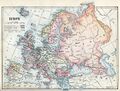 Political map of Europe in 1916, during World War I
 -
Map of Europe approximately 20,000 years ago during the Last Glacial Maximum
-
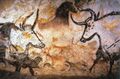 Prehistoric cave art from Lascaux, France
 -
Stonehenge in Wiltshire, England, a megalithic monument
-
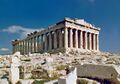


See Also[edit]
- History of Europe
- Geography of Europe
- Culture of Europe
- Healthcare in Europe
- European Union
- Demographics of Europe
- Economy of Europe
- List of European countries
| Articles related to Europe | ||||||||||||||||||||||||
|---|---|---|---|---|---|---|---|---|---|---|---|---|---|---|---|---|---|---|---|---|---|---|---|---|
Template:European diasporas Template:Western culture Template:Continents of the world Template:Regions of the world |
Page Template:Subject bar/styles.css has no content.

Medical Disclaimer: WikiMD is for informational purposes only and is not a substitute for professional medical advice. Content may be inaccurate or outdated and should not be used for diagnosis or treatment. Always consult your healthcare provider for medical decisions. Verify information with trusted sources such as CDC.gov and NIH.gov. By using this site, you agree that WikiMD is not liable for any outcomes related to its content. See full disclaimer.
Credits:Most images are courtesy of Wikimedia commons, and templates, categories Wikipedia, licensed under CC BY SA or similar.
Translate page: - East Asian
中文,
日本,
한국어,
South Asian
हिन्दी,
தமிழ்,
తెలుగు,
Urdu,
ಕನ್ನಡ,
Southeast Asian
Indonesian,
Vietnamese,
Thai,
မြန်မာဘာသာ,
বাংলা
European
español,
Deutsch,
français,
Greek,
português do Brasil,
polski,
română,
русский,
Nederlands,
norsk,
svenska,
suomi,
Italian
Middle Eastern & African
عربى,
Turkish,
Persian,
Hebrew,
Afrikaans,
isiZulu,
Kiswahili,
Other
Bulgarian,
Hungarian,
Czech,
Swedish,
മലയാളം,
मराठी,
ਪੰਜਾਬੀ,
ગુજરાતી,
Portuguese,
Ukrainian


