DNA microarray
DNA Microarray is a technology that allows scientists to examine thousands of genes simultaneously, to understand their expression levels, and to identify genetic variations. This technology has revolutionized the field of genomics, enabling large-scale studies that were previously not possible. DNA microarrays are also known as gene chips, DNA chips, or biochips.
Overview[edit]
A DNA microarray consists of a small, solid support, typically a glass slide, onto which DNA molecules are fixed in an orderly arrangement. These DNA molecules act as probes to detect complementary DNA or RNA sequences. When target sequences from a sample bind to these probes, they can be quantified, allowing for the analysis of gene expression or the identification of genetic variations.
Types of DNA Microarrays[edit]
There are two main types of DNA microarrays:
- cDNA Microarrays: These are made by spotting cDNA onto the support. They are typically used for gene expression studies.
- Oligonucleotide Microarrays: These contain short DNA fragments (oligonucleotides) that are synthesized directly onto the surface of the array. They can be used for both gene expression analysis and genotyping.
Applications[edit]
DNA microarray technology has a wide range of applications, including:
- Gene Expression Profiling: Understanding the expression levels of genes in different conditions, such as healthy vs. diseased tissues.
- Genotyping and SNP Analysis: Identifying genetic variations, such as single nucleotide polymorphisms (SNPs), which can be linked to disease susceptibility.
- Comparative Genomic Hybridization: Comparing genomic DNA from different samples to identify genomic gains and losses.
- Pathogen Detection: Identifying and typing pathogens by detecting their genetic material.
Procedure[edit]
The general procedure for using a DNA microarray involves:
- Sample Preparation: Extracting RNA or DNA from the sample.
- Labeling: Marking the extracted nucleic acids with fluorescent dyes.
- Hybridization: Incubating the labeled samples with the microarray, allowing complementary sequences to bind.
- Scanning: Using a laser to excite the fluorescent labels and a scanner to measure the intensity of fluorescence.
- Data Analysis: Analyzing the data to interpret gene expression levels or to identify genetic variations.
Challenges and Limitations[edit]
While DNA microarray technology offers many advantages, there are also challenges and limitations, including:
- Cost: The technology can be expensive, limiting its accessibility.
- Complexity of Data: The vast amount of data generated requires sophisticated tools and expertise for analysis.
- Sensitivity and Specificity: There can be issues with cross-hybridization and background noise, affecting the accuracy of the results.
Future Directions[edit]
Advancements in DNA microarray technology continue to expand its applications and improve its accuracy and affordability. Integration with other technologies, such as next-generation sequencing, is opening new avenues for research and clinical diagnostics.

DNA_microarray[edit]
-
From spit to DNA sample
-
NA hybrid
-
Microarray exp horizontal
-
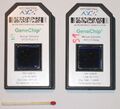 Affymetrix microarray
 -
Microarray printing
-
Microarray schema
-
Summary of RNA Microarray
-
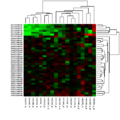 Heatmap
 -
Toxicology Research at FDA (NCTR 1470)


Medical Disclaimer: WikiMD is for informational purposes only and is not a substitute for professional medical advice. Content may be inaccurate or outdated and should not be used for diagnosis or treatment. Always consult your healthcare provider for medical decisions. Verify information with trusted sources such as CDC.gov and NIH.gov. By using this site, you agree that WikiMD is not liable for any outcomes related to its content. See full disclaimer.
Credits:Most images are courtesy of Wikimedia commons, and templates, categories Wikipedia, licensed under CC BY SA or similar.
Translate page: - East Asian
中文,
日本,
한국어,
South Asian
हिन्दी,
தமிழ்,
తెలుగు,
Urdu,
ಕನ್ನಡ,
Southeast Asian
Indonesian,
Vietnamese,
Thai,
မြန်မာဘာသာ,
বাংলা
European
español,
Deutsch,
français,
Greek,
português do Brasil,
polski,
română,
русский,
Nederlands,
norsk,
svenska,
suomi,
Italian
Middle Eastern & African
عربى,
Turkish,
Persian,
Hebrew,
Afrikaans,
isiZulu,
Kiswahili,
Other
Bulgarian,
Hungarian,
Czech,
Swedish,
മലയാളം,
मराठी,
ਪੰਜਾਬੀ,
ગુજરાતી,
Portuguese,
Ukrainian


_(6009042166).jpg)