Mechanical ventilation
Mechanical Ventilation is a method to assist or replace spontaneous breathing. This can be a life-saving intervention, but can also cause complications and side effects. Mechanical ventilation is often used in intensive care units, home care, and emergency medicine.
Indications[edit]
Mechanical ventilation is indicated when the patient's spontaneous breathing is inadequate to maintain life. It can also be used to sedate the patient for a short period of time, such as during the operation of a ventilator, or during recovery from a critical illness. The main indications for mechanical ventilation are:
- Acute lung injury including Acute Respiratory Distress Syndrome (ARDS)
- Chronic Obstructive Pulmonary Disease (COPD)
- Neuromuscular disease or weakness
- Drug overdose
- Anesthesia
- Sedation
- Coma
Modes[edit]
There are two main modes of mechanical ventilation: Positive Pressure Ventilation and Negative Pressure Ventilation.
Complications[edit]
Complications of mechanical ventilation are mainly related to the method of ventilation and the duration of ventilation. They include:
- Ventilator-associated pneumonia (VAP)
- Barotrauma
- Oxygen toxicity
- Right ventricular failure
- Pulmonary embolism
- Acute Respiratory Distress Syndrome (ARDS)
Weaning[edit]
Weaning is the process of gradually reducing the degree of mechanical ventilation and allowing the patient to resume spontaneous breathing. This can be a complex process and is usually managed by a team of healthcare professionals.
See also[edit]

This WikiMD article can only be edited by registered and verified editors. You can log in or register.
-
Artificial lung
-
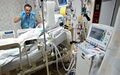 Respiratory therapist
 -
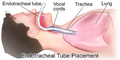 Endotracheal tube
 -
Engström respirator Model 150 (1955-1970)
-
Oscillator 3100A
-
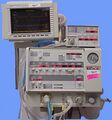 VIP Bird 2 ventilator
 -
Mechanical ventilation


Medical Disclaimer: WikiMD is for informational purposes only and is not a substitute for professional medical advice. Content may be inaccurate or outdated and should not be used for diagnosis or treatment. Always consult your healthcare provider for medical decisions. Verify information with trusted sources such as CDC.gov and NIH.gov. By using this site, you agree that WikiMD is not liable for any outcomes related to its content. See full disclaimer.
Credits:Most images are courtesy of Wikimedia commons, and templates, categories Wikipedia, licensed under CC BY SA or similar.
Translate page: - East Asian
中文,
日本,
한국어,
South Asian
हिन्दी,
தமிழ்,
తెలుగు,
Urdu,
ಕನ್ನಡ,
Southeast Asian
Indonesian,
Vietnamese,
Thai,
မြန်မာဘာသာ,
বাংলা
European
español,
Deutsch,
français,
Greek,
português do Brasil,
polski,
română,
русский,
Nederlands,
norsk,
svenska,
suomi,
Italian
Middle Eastern & African
عربى,
Turkish,
Persian,
Hebrew,
Afrikaans,
isiZulu,
Kiswahili,
Other
Bulgarian,
Hungarian,
Czech,
Swedish,
മലയാളം,
मराठी,
ਪੰਜਾਬੀ,
ગુજરાતી,
Portuguese,
Ukrainian


