Serous membrane
Serous membrane or serosa is a smooth tissue membrane consisting of two layers of mesothelium, which secrete serous fluid. The inner layer that covers organs (viscera) in body cavities is called the visceral membrane. A second layer of epithelial cells of the serosa, called the parietal layer, lines the body wall.
Structure[edit]
Serous membranes line and enclose several body cavities, known as serous cavities, where they secrete a lubricating fluid which reduces friction from muscle movement. Serosae have special names given to them, and are classified into:
- Pleura: The pleural serosa, in the thoracic cavity, is divided into the parietal pleura (lining the inside of the body wall) and the visceral pleura (covering the lungs).
- Peritoneum: The peritoneal serosa, in the abdominal cavity, is divided into the parietal peritoneum (lining the inside of the body wall) and the visceral peritoneum (covering the abdominal organs).
- Pericardium: The pericardial serosa, in the pericardial cavity, is divided into the parietal pericardium (lining the inside of the body wall) and the visceral pericardium (covering the heart).
Function[edit]
The serous membranes produce serous fluid, a thin, watery form of lubrication that allows organs to slide against each other without causing damage during muscle contractions.
Clinical significance[edit]
Inflammation of the serous membranes often results in serous fluid build-up in the serous cavities, a condition known as an effusion. This can occur in various diseases, such as pleurisy and peritonitis.
See also[edit]
References[edit]

This WikiMD article can only be edited by registered and verified editors. You can log in or register.
Serous_membrane[edit]
-
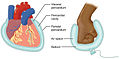 Serous Membrane
 -
Serous Organ Invagination
-
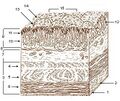 Illustration of Stomach Layers
 -
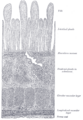 Gray's Anatomy Plate 1058


Medical Disclaimer: WikiMD is for informational purposes only and is not a substitute for professional medical advice. Content may be inaccurate or outdated and should not be used for diagnosis or treatment. Always consult your healthcare provider for medical decisions. Verify information with trusted sources such as CDC.gov and NIH.gov. By using this site, you agree that WikiMD is not liable for any outcomes related to its content. See full disclaimer.
Credits:Most images are courtesy of Wikimedia commons, and templates, categories Wikipedia, licensed under CC BY SA or similar.
Translate page: - East Asian
中文,
日本,
한국어,
South Asian
हिन्दी,
தமிழ்,
తెలుగు,
Urdu,
ಕನ್ನಡ,
Southeast Asian
Indonesian,
Vietnamese,
Thai,
မြန်မာဘာသာ,
বাংলা
European
español,
Deutsch,
français,
Greek,
português do Brasil,
polski,
română,
русский,
Nederlands,
norsk,
svenska,
suomi,
Italian
Middle Eastern & African
عربى,
Turkish,
Persian,
Hebrew,
Afrikaans,
isiZulu,
Kiswahili,
Other
Bulgarian,
Hungarian,
Czech,
Swedish,
മലയാളം,
मराठी,
ਪੰਜਾਬੀ,
ગુજરાતી,
Portuguese,
Ukrainian


