3,4-Dichloroamphetamine
Chemical compound
| Chemical Compound | |
|---|---|
| Identifiers | |
| CAS Number | |
| PubChem CID | |
| ChemSpider ID | |
| UNII | |
| ChEBI | |
| ChEMBL | |
| Properties | |
| Chemical Formula | |
| Molar Mass | |
| Appearance | |
| Density | |
| Melting Point | |
| Boiling Point | |
| Hazards | |
| GHS Pictograms | [[File:|50px]] |
| GHS Signal Word | |
| GHS Hazard Statements | |
| NFPA 704 | [[File:|50px]] |
| References | |
3,4-Dichloroamphetamine (DCA) is a chemical compound that belongs to the class of amphetamine derivatives. It is characterized by the presence of two chlorine atoms attached to the benzene ring of the amphetamine structure.
Chemical structure and properties[edit]
3,4-Dichloroamphetamine is a substituted amphetamine, which means it has a basic amphetamine structure with additional chemical groups attached. The presence of chlorine atoms at the 3 and 4 positions of the benzene ring distinguishes it from other amphetamines. This substitution can affect the compound's pharmacological properties, including its potency and selectivity for different neurotransmitter systems.
Synthesis[edit]
The synthesis of 3,4-Dichloroamphetamine involves the introduction of chlorine atoms into the amphetamine structure. The process typically starts with a precursor compound, which undergoes chlorination to yield the final product. The synthesis pathway is depicted in the accompanying diagram.
Pharmacology[edit]
As a derivative of amphetamine, 3,4-Dichloroamphetamine is expected to interact with the central nervous system. It may act as a stimulant, affecting the release and reuptake of neurotransmitters such as dopamine, norepinephrine, and serotonin. The specific effects and potency of DCA can vary based on its chemical structure and the presence of the chlorine substituents.
Potential uses and research[edit]
Research into 3,4-Dichloroamphetamine and similar compounds often focuses on their potential as psychostimulants or their effects on neurotransmitter systems. These studies can provide insights into the mechanisms of action of amphetamines and their potential therapeutic or adverse effects.
Safety and legal status[edit]
The safety profile of 3,4-Dichloroamphetamine is not well-documented, and its legal status may vary by jurisdiction. As with many amphetamine derivatives, it may be subject to regulation due to its potential for abuse and psychoactive effects.
Related pages[edit]
Gallery[edit]
-
 Skeletal formula of 3,4-Dichloroamphetamine
 -
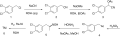 Synthesis of 3,4-Dichloroamphetamine


Medical Disclaimer: WikiMD is for informational purposes only and is not a substitute for professional medical advice. Content may be inaccurate or outdated and should not be used for diagnosis or treatment. Always consult your healthcare provider for medical decisions. Verify information with trusted sources such as CDC.gov and NIH.gov. By using this site, you agree that WikiMD is not liable for any outcomes related to its content. See full disclaimer.
Credits:Most images are courtesy of Wikimedia commons, and templates, categories Wikipedia, licensed under CC BY SA or similar.
Translate page: - East Asian
中文,
日本,
한국어,
South Asian
हिन्दी,
தமிழ்,
తెలుగు,
Urdu,
ಕನ್ನಡ,
Southeast Asian
Indonesian,
Vietnamese,
Thai,
မြန်မာဘာသာ,
বাংলা
European
español,
Deutsch,
français,
Greek,
português do Brasil,
polski,
română,
русский,
Nederlands,
norsk,
svenska,
suomi,
Italian
Middle Eastern & African
عربى,
Turkish,
Persian,
Hebrew,
Afrikaans,
isiZulu,
Kiswahili,
Other
Bulgarian,
Hungarian,
Czech,
Swedish,
മലയാളം,
मराठी,
ਪੰਜਾਬੀ,
ગુજરાતી,
Portuguese,
Ukrainian

