Alternatives to animal testing
-
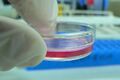 Cell culture in a tiny Petri dish
 -
IIHS crash test dummy in Hyundai Tucson
-
International Cooperation on Alternative Test Methods (ICATM)

Alternatives to Animal Testing[edit]
Alternatives to animal testing are methods that "replace, reduce, or refine" the use of animals in research and testing. These alternatives are often referred to as the "Three Rs": Replacement, Reduction, and Refinement. The development and implementation of these alternatives aim to minimize the ethical concerns associated with animal testing while still achieving scientific and regulatory objectives.
Replacement[edit]
Replacement refers to the use of non-animal methods to achieve the same scientific goals as traditional animal testing. This can include:
- In vitro testing: These are tests conducted in a controlled environment outside of a living organism, such as in a petri dish or test tube. Cell culture techniques are commonly used to study biological processes and test the effects of substances on cells.
- Computer modeling: Also known as in silico methods, these involve the use of computer simulations to predict the effects of substances on biological systems. Quantitative structure-activity relationship (QSAR) models are an example of this approach.
- Human-based studies: These include clinical trials and epidemiological studies that directly involve human participants. These studies can provide data that is more directly applicable to human health.
Reduction[edit]
Reduction involves strategies to minimize the number of animals used in research. This can be achieved by:
- Improving experimental design: Using statistical methods to ensure that the smallest number of animals is used to achieve reliable results.
- Sharing data and resources: Encouraging collaboration and data sharing among researchers to avoid unnecessary duplication of experiments.
- Using advanced technologies: Employing techniques such as microdosing and imaging to gather data from fewer animals.
Refinement[edit]
Refinement refers to modifications of husbandry or experimental procedures to minimize pain and distress to the animals used. This can include:
- Improving living conditions: Ensuring that animals are housed in environments that meet their physical and psychological needs.
- Using less invasive techniques: Developing methods that reduce the need for invasive procedures or that use anesthesia and analgesia to minimize pain.
- Training and skill development: Ensuring that researchers and technicians are well-trained in handling animals and conducting experiments to reduce stress and improve welfare.
Related Pages[edit]

Medical Disclaimer: WikiMD is for informational purposes only and is not a substitute for professional medical advice. Content may be inaccurate or outdated and should not be used for diagnosis or treatment. Always consult your healthcare provider for medical decisions. Verify information with trusted sources such as CDC.gov and NIH.gov. By using this site, you agree that WikiMD is not liable for any outcomes related to its content. See full disclaimer.
Credits:Most images are courtesy of Wikimedia commons, and templates, categories Wikipedia, licensed under CC BY SA or similar.
Translate page: - East Asian
中文,
日本,
한국어,
South Asian
हिन्दी,
தமிழ்,
తెలుగు,
Urdu,
ಕನ್ನಡ,
Southeast Asian
Indonesian,
Vietnamese,
Thai,
မြန်မာဘာသာ,
বাংলা
European
español,
Deutsch,
français,
Greek,
português do Brasil,
polski,
română,
русский,
Nederlands,
norsk,
svenska,
suomi,
Italian
Middle Eastern & African
عربى,
Turkish,
Persian,
Hebrew,
Afrikaans,
isiZulu,
Kiswahili,
Other
Bulgarian,
Hungarian,
Czech,
Swedish,
മലയാളം,
मराठी,
ਪੰਜਾਬੀ,
ગુજરાતી,
Portuguese,
Ukrainian


.jpg)