Tofu skin
Tofu skin, also known as yuba, is a food product made from soybeans. It is a byproduct of the process of making soy milk. During this process, a film or skin forms on the liquid surface, which is then harvested to create tofu skin.
Etymology[edit]
The term "tofu skin" is a direct translation of the Chinese term "dòufǔ pí" (豆腐皮). In Japan, it is known as "yuba", which is derived from the term "yūbatō" (湯葉筒), meaning "hot water leaf".
Production[edit]
Tofu skin is produced by boiling soy milk. As the soy milk boils, a film or skin forms on the surface, which is then carefully removed and hung to dry. The resulting product is a thin, flexible sheet that can be used in a variety of dishes.
Culinary uses[edit]
Tofu skin is a versatile ingredient that can be used in a variety of dishes. It can be used fresh, dried, or rehydrated, and can be eaten on its own or used as a wrapper for other ingredients. In Chinese cuisine, it is often used in stews and stir-fries, while in Japanese cuisine, it is commonly used in soups and sushi.
Nutrition[edit]
Tofu skin is a good source of protein, iron, and calcium. It is also low in fat and high in fiber, making it a healthy choice for those looking to maintain a balanced diet.
See also[edit]
References[edit]

This WikiMD article can only be edited by registered and verified editors. You can log in or register.
-
Tofu skin
-
Soy milk skin maker
-
The making of a tofu skin
-
Fucuk
-
Yuba meal
-
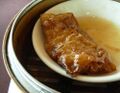 Tofu skin roll
 -
Tofu skin stick
-
Kumiage yuba and sashimi yuba at Washoku Sato


Medical Disclaimer: WikiMD is for informational purposes only and is not a substitute for professional medical advice. Content may be inaccurate or outdated and should not be used for diagnosis or treatment. Always consult your healthcare provider for medical decisions. Verify information with trusted sources such as CDC.gov and NIH.gov. By using this site, you agree that WikiMD is not liable for any outcomes related to its content. See full disclaimer.
Credits:Most images are courtesy of Wikimedia commons, and templates, categories Wikipedia, licensed under CC BY SA or similar.
Translate page: - East Asian
中文,
日本,
한국어,
South Asian
हिन्दी,
தமிழ்,
తెలుగు,
Urdu,
ಕನ್ನಡ,
Southeast Asian
Indonesian,
Vietnamese,
Thai,
မြန်မာဘာသာ,
বাংলা
European
español,
Deutsch,
français,
Greek,
português do Brasil,
polski,
română,
русский,
Nederlands,
norsk,
svenska,
suomi,
Italian
Middle Eastern & African
عربى,
Turkish,
Persian,
Hebrew,
Afrikaans,
isiZulu,
Kiswahili,
Other
Bulgarian,
Hungarian,
Czech,
Swedish,
മലയാളം,
मराठी,
ਪੰਜਾਬੀ,
ગુજરાતી,
Portuguese,
Ukrainian


.jpg)


.JPG)