Banana leaf
A Banana leaf is the leaf of the Banana plant, an herbaceous plant belonging to the genus Musa, which is part of the family Musaceae. Banana leaves have a wide range of applications due to their large size, flexibility, waterproof nature, and decorative appeal.
Description[edit]
Banana leaves are large, flexible, and waterproof. They are a vibrant green color, but can turn to brown as they age. The leaves can grow up to 9 feet in length and 2 feet in width. They are composed of a "stalk", or petiole, that supports the blade or lamina.
Uses[edit]
Banana leaves have a wide variety of uses, both practical and symbolic, across different cultures.
Culinary Uses[edit]
In many tropical and subtropical countries, banana leaves are used as a natural packaging material for food. They are often used as a wrapping for cooking food as they can withstand high temperatures and add a subtle flavor to the food. Some examples include Tamales, a traditional Mesoamerican dish, and South Indian cuisine, where meals are often served on a banana leaf.
Cultural Significance[edit]
Banana leaves also hold cultural significance in many societies. In Hinduism, they are used during festivals and rituals as a tray for offerings to the deities. In Balinese Hinduism, banana leaves are used in offerings, known as canang.
Other Uses[edit]
Apart from culinary and cultural uses, banana leaves are also used in crafting, such as making baskets, hats, and toys. They are also used in the production of bio-degradable plates and cups.
Environmental Impact[edit]
The use of banana leaves as a natural, bio-degradable alternative to plastic packaging has been recognized as a sustainable practice. It reduces the amount of non-biodegradable waste and helps in the conservation of natural resources.
See Also[edit]
This leaf related article is a stub. You can help WikiMD by expanding it.

-
 Banana leaf
 -
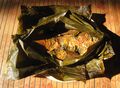 Pepes ikan emas
 -
 Making of Banana Leaf Plates
 -
 Steamed rice in banana leaf
 -
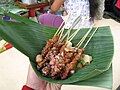 Chicken satay on banana leaf
 -
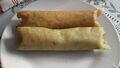 Wrapped lontong
 -
 Nasi Lemak
 -
 Cassava Suman
 -
 Lunch from Karnataka
 -
 Banana leaf
 -
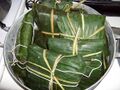 Nacatamales in steamer
 -
 Baho
Baho -
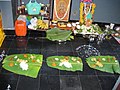 Prasadam on banana leaves

_Sunda.jpg)


.jpg)


Medical Disclaimer: WikiMD is for informational purposes only and is not a substitute for professional medical advice. Content may be inaccurate or outdated and should not be used for diagnosis or treatment. Always consult your healthcare provider for medical decisions. Verify information with trusted sources such as CDC.gov and NIH.gov. By using this site, you agree that WikiMD is not liable for any outcomes related to its content. See full disclaimer.
Credits:Most images are courtesy of Wikimedia commons, and templates, categories Wikipedia, licensed under CC BY SA or similar.
Translate page: - East Asian
中文,
日本,
한국어,
South Asian
हिन्दी,
தமிழ்,
తెలుగు,
Urdu,
ಕನ್ನಡ,
Southeast Asian
Indonesian,
Vietnamese,
Thai,
မြန်မာဘာသာ,
বাংলা
European
español,
Deutsch,
français,
Greek,
português do Brasil,
polski,
română,
русский,
Nederlands,
norsk,
svenska,
suomi,
Italian
Middle Eastern & African
عربى,
Turkish,
Persian,
Hebrew,
Afrikaans,
isiZulu,
Kiswahili,
Other
Bulgarian,
Hungarian,
Czech,
Swedish,
മലയാളം,
मराठी,
ਪੰਜਾਬੀ,
ગુજરાતી,
Portuguese,
Ukrainian

