Coconut sugar
Coconut sugar, also known as coconut palm sugar, is a type of sugar produced from the sap of the flower bud stem of the coconut palm. It has been used as a traditional sweetener for thousands of years in the South and South-East Asian regions where the coconut palm is in abundant supply, including the Philippines, Indonesia, and Thailand.
Production[edit]
The production of coconut sugar involves tapping the flower bud stem of the coconut palm to collect the sap. The sap is then placed under heat until most of the water has evaporated, leaving a thick syrup, which is then further reduced to crystals.
Nutritional Value[edit]
Coconut sugar is touted as being more nutritious and lower on the glycemic index than traditional granulated sugar. It contains traces of some minerals and antioxidants, as well as a fiber called inulin, which may slow glucose absorption and explain why coconut sugar has a lower glycemic index than regular table sugar.
Use in Cooking[edit]
Coconut sugar has a similar sweetness level to regular sugar. It can be used in the same proportions as regular sugar in most recipes. It has a slight hint of caramel flavor, which can enhance the taste of certain dishes.
Sustainability[edit]
The production of coconut sugar is considered sustainable because the coconut palm trees produce 50-75% more sugar per acre than sugar cane, while using less than 1/5th of the resources.
Health Concerns[edit]
Despite its slightly better nutritional profile, coconut sugar is still high in sugar, and consuming too much could lead to health problems such as weight gain, tooth decay, and poor heart health.
See Also[edit]

-
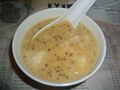
Coconut sugar in a bowl
-
 Coconut sugar blocks
 -
 Steamed Goan rice and jaggery cakes
 -
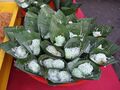 Onde-onde, a traditional snack
 -
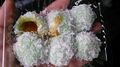 Ondeh-ondeh kueh


Medical Disclaimer: WikiMD is for informational purposes only and is not a substitute for professional medical advice. Content may be inaccurate or outdated and should not be used for diagnosis or treatment. Always consult your healthcare provider for medical decisions. Verify information with trusted sources such as CDC.gov and NIH.gov. By using this site, you agree that WikiMD is not liable for any outcomes related to its content. See full disclaimer.
Credits:Most images are courtesy of Wikimedia commons, and templates, categories Wikipedia, licensed under CC BY SA or similar.
Translate page: - East Asian
中文,
日本,
한국어,
South Asian
हिन्दी,
தமிழ்,
తెలుగు,
Urdu,
ಕನ್ನಡ,
Southeast Asian
Indonesian,
Vietnamese,
Thai,
မြန်မာဘာသာ,
বাংলা
European
español,
Deutsch,
français,
Greek,
português do Brasil,
polski,
română,
русский,
Nederlands,
norsk,
svenska,
suomi,
Italian
Middle Eastern & African
عربى,
Turkish,
Persian,
Hebrew,
Afrikaans,
isiZulu,
Kiswahili,
Other
Bulgarian,
Hungarian,
Czech,
Swedish,
മലയാളം,
मराठी,
ਪੰਜਾਬੀ,
ગુજરાતી,
Portuguese,
Ukrainian


