Digestive enzyme
Digestive Enzymes are a group of enzymes that break down polymeric macromolecules into their smaller building blocks, in order to facilitate their absorption by the body. Digestive enzymes are found in the digestive tracts of animals (including humans) and in the tracts of carnivorous plants, where they aid in the digestion of food, as well as inside the cells, especially in their lysosomes, where they function to maintain cellular survival. Digestive enzymes are diverse and are classified based on their substrate, for example lipases split fats into three fatty acids and a glycerol molecule.
Types of Digestive Enzymes[edit]
There are three main types of digestive enzymes:
- Proteases and peptidases split proteins into small peptides and amino acids.
- Lipases split fat into three fatty acids and a glycerol molecule.
- Amylases split carbohydrates such as starch and sugars into simple sugars such as glucose.
Function of Digestive Enzymes[edit]
Digestive enzymes, primarily produced* in the pancreas and small intestine, break down our food into nutrients so that our bodies can absorb them. If we don't have enough digestive enzymes, we can't break down our food—which means even though we’re eating well, we aren’t absorbing all that good nutrition.
Digestive Enzyme Supplements[edit]
Some people may need to take digestive enzyme supplements to help their body properly break down and absorb nutrients from food. These supplements can be particularly helpful for people with certain health conditions, such as pancreatic insufficiency or cystic fibrosis.
See Also[edit]
References[edit]

This WikiMD article can only be edited by registered and verified editors. You can log in or register.
-
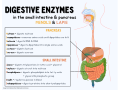 Diagram showing various digestive enzymes and their functions.
 -
 Illustration of major digestive enzymes involved in the human digestive process.
 -
 Map depicting the legal situation of surrogacy around the world.


Medical Disclaimer: WikiMD is for informational purposes only and is not a substitute for professional medical advice. Content may be inaccurate or outdated and should not be used for diagnosis or treatment. Always consult your healthcare provider for medical decisions. Verify information with trusted sources such as CDC.gov and NIH.gov. By using this site, you agree that WikiMD is not liable for any outcomes related to its content. See full disclaimer.
Credits:Most images are courtesy of Wikimedia commons, and templates, categories Wikipedia, licensed under CC BY SA or similar.
Translate page: - East Asian
中文,
日本,
한국어,
South Asian
हिन्दी,
தமிழ்,
తెలుగు,
Urdu,
ಕನ್ನಡ,
Southeast Asian
Indonesian,
Vietnamese,
Thai,
မြန်မာဘာသာ,
বাংলা
European
español,
Deutsch,
français,
Greek,
português do Brasil,
polski,
română,
русский,
Nederlands,
norsk,
svenska,
suomi,
Italian
Middle Eastern & African
عربى,
Turkish,
Persian,
Hebrew,
Afrikaans,
isiZulu,
Kiswahili,
Other
Bulgarian,
Hungarian,
Czech,
Swedish,
മലയാളം,
मराठी,
ਪੰਜਾਬੀ,
ગુજરાતી,
Portuguese,
Ukrainian

