Diterpene
Diterpenes are a class of chemical compounds composed of two terpene units with the molecular formula C20H32; they may also be thought of as consisting of four isoprene units. They are biosynthesized by plants, animals and fungi via the HMG-CoA reductase pathway, with geranylgeranyl pyrophosphate being a primary intermediate. Diterpenes form the basis for biologically important compounds such as retinol, retinal, and phytol. They also form the basis for a class of steroids known as diterpenoids.
Biosynthesis[edit]
Diterpenes are synthesized in plants via the mevalonate pathway or the non-mevalonate pathway, also known as the DOXP/MEP pathway. The former involves the condensation of two molecules of geranylgeranyl pyrophosphate (GGPP), a 20-carbon terpenoid, to form a variety of diterpenes. The latter pathway involves the condensation of dimethylallyl pyrophosphate (DMAPP) and isopentenyl pyrophosphate (IPP) to form geranyl pyrophosphate (GPP), which is then converted to GGPP by the enzyme geranylgeranyl pyrophosphate synthase.
Types of Diterpenes[edit]
There are several types of diterpenes, including:
- Clerodane diterpenes
- Labdane diterpenes
- Kaurane diterpenes
- Abietane diterpenes
- Pimarane diterpenes
- Podocarpane diterpenes
- Cassane diterpenes
- Rosane diterpenes
Each of these types of diterpenes has unique structures and biological activities.
Biological Importance[edit]
Diterpenes have a wide range of biological activities, including anti-inflammatory, antimicrobial, antiviral, and anticancer properties. They are also involved in the biosynthesis of important biological compounds such as vitamin A and vitamin K.
See Also[edit]

This WikiMD article can only be edited by registered and verified editors. You can log in or register.
-
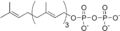 Geranylgeranyl pyrophosphate
 -
 Taxadiene
 -
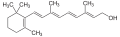 All-trans Retinol
 -
 Phytol


Medical Disclaimer: WikiMD is for informational purposes only and is not a substitute for professional medical advice. Content may be inaccurate or outdated and should not be used for diagnosis or treatment. Always consult your healthcare provider for medical decisions. Verify information with trusted sources such as CDC.gov and NIH.gov. By using this site, you agree that WikiMD is not liable for any outcomes related to its content. See full disclaimer.
Credits:Most images are courtesy of Wikimedia commons, and templates, categories Wikipedia, licensed under CC BY SA or similar.
Translate page: - East Asian
中文,
日本,
한국어,
South Asian
हिन्दी,
தமிழ்,
తెలుగు,
Urdu,
ಕನ್ನಡ,
Southeast Asian
Indonesian,
Vietnamese,
Thai,
မြန်မာဘာသာ,
বাংলা
European
español,
Deutsch,
français,
Greek,
português do Brasil,
polski,
română,
русский,
Nederlands,
norsk,
svenska,
suomi,
Italian
Middle Eastern & African
عربى,
Turkish,
Persian,
Hebrew,
Afrikaans,
isiZulu,
Kiswahili,
Other
Bulgarian,
Hungarian,
Czech,
Swedish,
മലയാളം,
मराठी,
ਪੰਜਾਬੀ,
ગુજરાતી,
Portuguese,
Ukrainian

