Embolus
Embolus is a medical term referring to an unattached mass that travels through the bloodstream and is capable of clogging arterial capillary beds. This can lead to tissue death or infarction. Emboli are usually blood clots, but they can also be fat globules, air bubbles, or other substances.
Types of Emboli[edit]
There are several types of emboli, including:
- Thromboembolism: This is the most common type of embolus. It is a blood clot that has formed in one part of the body and travels to another part of the body.
- Fat Embolism: This type of embolus is composed of fat particles and usually occurs after a bone fracture or major trauma.
- Air Embolism: This type of embolus is composed of air bubbles. It can occur during certain medical procedures or from decompression sickness.
- Amniotic Fluid Embolism: This rare type of embolus occurs when amniotic fluid enters the mother's bloodstream during childbirth.
Symptoms[edit]
The symptoms of an embolus depend on where the embolus lodges in the body. Common symptoms include:
Diagnosis[edit]
Diagnosis of an embolus often involves imaging tests such as a CT scan or MRI. Blood tests may also be used to detect certain substances that are released when a clot forms and then breaks apart.
Treatment[edit]
Treatment for an embolus depends on the type of embolus and where it is located. Treatments may include:
- Anticoagulants: These are medications that prevent clots from forming.
- Thrombolytics: These are medications that dissolve clots.
- Surgery: In some cases, surgery may be needed to remove the embolus.
Prevention[edit]
Prevention of emboli involves reducing risk factors for clot formation, such as maintaining a healthy weight, not smoking, and managing chronic conditions like diabetes and high blood pressure.

This WikiMD article can only be edited by registered and verified editors. You can log in or register.
-
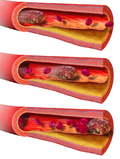 Animation of a blood clot forming
 -
 Recent pulmonary thromboembolus

.jpg)

Medical Disclaimer: WikiMD is for informational purposes only and is not a substitute for professional medical advice. Content may be inaccurate or outdated and should not be used for diagnosis or treatment. Always consult your healthcare provider for medical decisions. Verify information with trusted sources such as CDC.gov and NIH.gov. By using this site, you agree that WikiMD is not liable for any outcomes related to its content. See full disclaimer.
Credits:Most images are courtesy of Wikimedia commons, and templates, categories Wikipedia, licensed under CC BY SA or similar.
Translate page: - East Asian
中文,
日本,
한국어,
South Asian
हिन्दी,
தமிழ்,
తెలుగు,
Urdu,
ಕನ್ನಡ,
Southeast Asian
Indonesian,
Vietnamese,
Thai,
မြန်မာဘာသာ,
বাংলা
European
español,
Deutsch,
français,
Greek,
português do Brasil,
polski,
română,
русский,
Nederlands,
norsk,
svenska,
suomi,
Italian
Middle Eastern & African
عربى,
Turkish,
Persian,
Hebrew,
Afrikaans,
isiZulu,
Kiswahili,
Other
Bulgarian,
Hungarian,
Czech,
Swedish,
മലയാളം,
मराठी,
ਪੰਜਾਬੀ,
ગુજરાતી,
Portuguese,
Ukrainian

