Embryoid body
Embryoid body (EB) is a three-dimensional aggregation of stem cells that is used as a model system for studying cell differentiation and developmental biology. The formation of embryoid bodies is a common step in the differentiation of pluripotent stem cells, including both embryonic stem cells (ESCs) and induced pluripotent stem cells (iPSCs).
Formation[edit]
Embryoid bodies are typically formed by culturing pluripotent stem cells in suspension, without the presence of leukemia inhibitory factor (LIF), which is used to maintain the pluripotency of stem cells. The cells aggregate together and form a spherical structure, which is referred to as an embryoid body. The formation of embryoid bodies is a critical step in the differentiation of pluripotent stem cells, as it allows the cells to undergo spontaneous differentiation into various cell types.
Structure[edit]
The structure of an embryoid body is similar to that of an early post-implantation embryo. It consists of an outer layer of endoderm, an inner layer of mesoderm, and a core of ectoderm. This structure allows the embryoid body to mimic the process of gastrulation, which is the formation of the three germ layers in the early embryo.
Applications[edit]
Embryoid bodies are used in a variety of research applications. They are commonly used as a model system for studying the process of cell differentiation and developmental biology. They can also be used for the generation of specific cell types, such as cardiomyocytes, neurons, and hepatocytes, for use in cell therapy and regenerative medicine. In addition, embryoid bodies can be used for drug screening and toxicology studies, as they provide a more physiologically relevant model than traditional 2D cell cultures.
See also[edit]
- Stem cell
- Cell differentiation
- Developmental biology
- Embryonic stem cell
- Induced pluripotent stem cell
 | This cell biology article is a stub. You can help WikiMD by expanding the page. |
 | This developmental biology article is a stub. You can help WikiMD by expanding the page. |
-
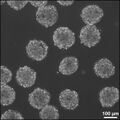 Embryoid body
 -
 Embryoid body


Medical Disclaimer: WikiMD is for informational purposes only and is not a substitute for professional medical advice. Content may be inaccurate or outdated and should not be used for diagnosis or treatment. Always consult your healthcare provider for medical decisions. Verify information with trusted sources such as CDC.gov and NIH.gov. By using this site, you agree that WikiMD is not liable for any outcomes related to its content. See full disclaimer.
Credits:Most images are courtesy of Wikimedia commons, and templates, categories Wikipedia, licensed under CC BY SA or similar.
Translate page: - East Asian
中文,
日本,
한국어,
South Asian
हिन्दी,
தமிழ்,
తెలుగు,
Urdu,
ಕನ್ನಡ,
Southeast Asian
Indonesian,
Vietnamese,
Thai,
မြန်မာဘာသာ,
বাংলা
European
español,
Deutsch,
français,
Greek,
português do Brasil,
polski,
română,
русский,
Nederlands,
norsk,
svenska,
suomi,
Italian
Middle Eastern & African
عربى,
Turkish,
Persian,
Hebrew,
Afrikaans,
isiZulu,
Kiswahili,
Other
Bulgarian,
Hungarian,
Czech,
Swedish,
മലയാളം,
मराठी,
ਪੰਜਾਬੀ,
ગુજરાતી,
Portuguese,
Ukrainian

