Flemingia
Flemingia is a genus of flowering plants in the family Fabaceae. It is native to tropical and subtropical regions of Asia and Africa. The genus comprises around 35 species, which are known for their importance in agriculture, horticulture, and traditional medicine.
Description[edit]
Plants in the genus Flemingia are typically perennial herbs or shrubs. They have compound leaves, usually with three leaflets, and produce inflorescences in the form of racemes or panicles. The flowers are generally small, with a papilionaceous structure typical of the Fabaceae family. The fruit is a legume, containing several seeds.
Distribution and Habitat[edit]
Flemingia species are found in a variety of habitats, including forests, grasslands, and savannas. They are particularly common in India, China, and Southeast Asia, but some species are also found in Africa.
Uses[edit]
Agriculture[edit]
Several species of Flemingia are used in agroforestry systems. They are valued for their ability to improve soil fertility through nitrogen fixation, a process facilitated by their symbiotic relationship with rhizobia bacteria. Flemingia macrophylla is commonly used as a green manure and cover crop.
Horticulture[edit]
Some Flemingia species are cultivated as ornamental plants due to their attractive foliage and flowers. They are often used in landscaping and garden design.
Traditional Medicine[edit]
In traditional medicine, various parts of Flemingia plants are used to treat a range of ailments. For example, Flemingia strobilifera is used in Ayurveda and Traditional Chinese Medicine for its purported anti-inflammatory and analgesic properties.
Notable Species[edit]
Conservation[edit]
Some species of Flemingia are threatened by habitat loss and overharvesting. Conservation efforts are needed to protect these plants and their habitats.
Gallery[edit]
-
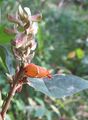 Flemingia macrophylla
 -
Flemingia strobilifera

See Also[edit]
References[edit]
External Links[edit]


 | This Fabaceae-related article is a stub. You can help WikiMD by expanding the page. |

Medical Disclaimer: WikiMD is for informational purposes only and is not a substitute for professional medical advice. Content may be inaccurate or outdated and should not be used for diagnosis or treatment. Always consult your healthcare provider for medical decisions. Verify information with trusted sources such as CDC.gov and NIH.gov. By using this site, you agree that WikiMD is not liable for any outcomes related to its content. See full disclaimer.
Credits:Most images are courtesy of Wikimedia commons, and templates, categories Wikipedia, licensed under CC BY SA or similar.
Translate page: - East Asian
中文,
日本,
한국어,
South Asian
हिन्दी,
தமிழ்,
తెలుగు,
Urdu,
ಕನ್ನಡ,
Southeast Asian
Indonesian,
Vietnamese,
Thai,
မြန်မာဘာသာ,
বাংলা
European
español,
Deutsch,
français,
Greek,
português do Brasil,
polski,
română,
русский,
Nederlands,
norsk,
svenska,
suomi,
Italian
Middle Eastern & African
عربى,
Turkish,
Persian,
Hebrew,
Afrikaans,
isiZulu,
Kiswahili,
Other
Bulgarian,
Hungarian,
Czech,
Swedish,
മലയാളം,
मराठी,
ਪੰਜਾਬੀ,
ગુજરાતી,
Portuguese,
Ukrainian


