Refrigerator


Appliance for preserving food at low temperatures
Refrigerator
{{This appliance-related article is a stub.}}
A refrigerator (colloquially fridge) is a common household appliance that consists of a thermally insulated compartment and a heat pump (mechanical, electronic, or chemical) that transfers heat from its interior to its external environment so that its interior is cooled to a temperature below the room temperature. Refrigeration is an essential food storage technique in developed countries. Lower temperatures in a confined volume lower the reproduction rate of bacteria, so the refrigerator reduces the rate of spoilage. A refrigerator maintains a temperature a few degrees above the freezing point of water. Optimum temperature range for perishable food storage is 3 to 5 °C (37 to 41 °F). A similar device that maintains a temperature below the freezing point of water is called a freezer.
History[edit]
The first known artificial refrigeration was demonstrated by William Cullen at the University of Glasgow in 1748. The first practical vapor-compression refrigeration system was built by Jacob Perkins in 1834. The first commercial ice-making machine was invented in 1854, and the first refrigerator for domestic use was invented in 1913.
Types[edit]
Refrigerators come in various types, including:
- Top-freezer refrigerator
- Bottom-freezer refrigerator
- Side-by-side refrigerator
- French door refrigerator
- Compact refrigerator
- Wine refrigerator
Components[edit]
A typical refrigerator consists of the following components:
Refrigerants[edit]
Refrigerants are substances used in a heat cycle to transfer heat from one area and remove it to another. Common refrigerants include:
Energy Efficiency[edit]
Modern refrigerators are designed to be energy efficient. The Energy Star program certifies appliances that meet certain energy efficiency criteria. Features such as inverter compressors and improved insulation contribute to lower energy consumption.
Maintenance[edit]
Regular maintenance of a refrigerator includes:
- Cleaning the condenser coils
- Checking the door seals
- Defrosting the freezer
- Replacing the water filter (if applicable)
Environmental Impact[edit]
Refrigerators have an environmental impact due to the refrigerants used and the energy consumed. Older refrigerants like CFCs and HCFCs have been phased out due to their ozone-depleting properties. Modern refrigerants are designed to be more environmentally friendly.
See also[edit]
References[edit]
External links[edit]

 | This technology-related article is a stub. You can help WikiMD by expanding the page. |
Refrigerator[edit]
-
 Theater Commercial, Electric Refrigerator, 1926
 -
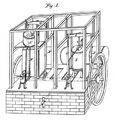 Gorrie Ice Machine
 -
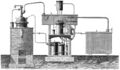 Appareil Carré
 -
 Linde Cycle 1895-1903 Patent Cryo
 -
 Monitor Refrigerator
 -
 Refrigerator Cycle
 -
Introduction to the Process and Components of a Conventional Refrigerator
-
 Refrigerator Cycle


Medical Disclaimer: WikiMD is for informational purposes only and is not a substitute for professional medical advice. Content may be inaccurate or outdated and should not be used for diagnosis or treatment. Always consult your healthcare provider for medical decisions. Verify information with trusted sources such as CDC.gov and NIH.gov. By using this site, you agree that WikiMD is not liable for any outcomes related to its content. See full disclaimer.
Credits:Most images are courtesy of Wikimedia commons, and templates, categories Wikipedia, licensed under CC BY SA or similar.
Translate page: - East Asian
中文,
日本,
한국어,
South Asian
हिन्दी,
தமிழ்,
తెలుగు,
Urdu,
ಕನ್ನಡ,
Southeast Asian
Indonesian,
Vietnamese,
Thai,
မြန်မာဘာသာ,
বাংলা
European
español,
Deutsch,
français,
Greek,
português do Brasil,
polski,
română,
русский,
Nederlands,
norsk,
svenska,
suomi,
Italian
Middle Eastern & African
عربى,
Turkish,
Persian,
Hebrew,
Afrikaans,
isiZulu,
Kiswahili,
Other
Bulgarian,
Hungarian,
Czech,
Swedish,
മലയാളം,
मराठी,
ਪੰਜਾਬੀ,
ગુજરાતી,
Portuguese,
Ukrainian

