Gonadotropic cell
Gonadotropic cells are specialized cells within the anterior pituitary gland that produce and secrete gonadotropins. These cells play a crucial role in the endocrine system, particularly in the regulation of the reproductive system.
Structure[edit]
Gonadotropic cells are located in the anterior pituitary gland, a small gland located at the base of the brain. These cells are part of the adenohypophysis, which is the glandular, anterior lobe that together with the neurohypophysis, forms the pituitary gland.
Function[edit]
The primary function of gonadotropic cells is to produce and secrete gonadotropins. These are hormones that stimulate the gonads - the ovaries in females and the testes in males - to produce sex hormones and gametes.
There are two main types of gonadotropins produced by these cells:
- Follicle-stimulating hormone (FSH): This hormone stimulates the growth and maturation of follicles in the ovaries of females. In males, it stimulates the production of sperm.
- Luteinizing hormone (LH): In females, this hormone triggers ovulation and stimulates the corpus luteum to produce progesterone. In males, it stimulates the production of testosterone.
Clinical significance[edit]
Abnormalities in the function of gonadotropic cells can lead to a variety of medical conditions. For example, overproduction of gonadotropins can lead to precocious puberty, while underproduction can lead to delayed puberty or infertility. In addition, tumors of the pituitary gland can affect the function of gonadotropic cells, leading to a variety of symptoms depending on the specific hormones that are over- or under-produced.
See also[edit]
References[edit]

Gonadotropic cell[edit]
-
Gonadotropic cell
-
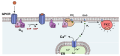 Activation of protein kinase C
 -
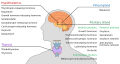 Endocrine and central nervous system


Medical Disclaimer: WikiMD is for informational purposes only and is not a substitute for professional medical advice. Content may be inaccurate or outdated and should not be used for diagnosis or treatment. Always consult your healthcare provider for medical decisions. Verify information with trusted sources such as CDC.gov and NIH.gov. By using this site, you agree that WikiMD is not liable for any outcomes related to its content. See full disclaimer.
Credits:Most images are courtesy of Wikimedia commons, and templates, categories Wikipedia, licensed under CC BY SA or similar.
Translate page: - East Asian
中文,
日本,
한국어,
South Asian
हिन्दी,
தமிழ்,
తెలుగు,
Urdu,
ಕನ್ನಡ,
Southeast Asian
Indonesian,
Vietnamese,
Thai,
မြန်မာဘာသာ,
বাংলা
European
español,
Deutsch,
français,
Greek,
português do Brasil,
polski,
română,
русский,
Nederlands,
norsk,
svenska,
suomi,
Italian
Middle Eastern & African
عربى,
Turkish,
Persian,
Hebrew,
Afrikaans,
isiZulu,
Kiswahili,
Other
Bulgarian,
Hungarian,
Czech,
Swedish,
മലയാളം,
मराठी,
ਪੰਜਾਬੀ,
ગુજરાતી,
Portuguese,
Ukrainian


