Grain
Grain is the seed or the fruit coming from a cereal grass, which is used for food. It can also refer to a small, hard particle or a small amount of a particular substance, especially one that can be measured.
Overview[edit]
Grains are small, hard, dry seeds, with or without attached hulls or fruit layers, harvested for human or animal consumption. Agronomists also call the plants producing such seeds "grain crops". The two main types of commercial grain crops are cereals and legumes.
Types of Grains[edit]
Grains can be categorized into two types:
- Cereal Grains: These are the most widely consumed grains. They include rice, wheat, maize, barley, rye, oats, and millet.
- Pseudocereal Grains: These are not true grains, but are used in much the same way. They include quinoa, amaranth, and buckwheat.
Health Benefits[edit]
Grains are a great source of many nutrients, including fiber, B vitamins (thiamin, riboflavin, niacin and folate) and minerals (iron, magnesium and selenium). Diets rich in whole grain foods and other plant foods and low in total fat, saturated fat, and cholesterol may reduce the risk of heart disease and some cancers.
See Also[edit]
References[edit]

This WikiMD article can only be edited by registered and verified editors. You can log in or register.
-
Grain
-
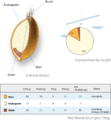 Wheat kernel nutrition
 -
Grain
-
Barley grains (Hordeum vulgare)
-
Rye grains (Secale cereale)
-
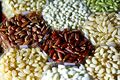 Rice grains
 -
Buckwheat (Fagopyrum)
-
Lentil seeds (Lens culinaris)
-
Canola
-
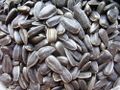 Sunflower seeds

.jpg)


Medical Disclaimer: WikiMD is for informational purposes only and is not a substitute for professional medical advice. Content may be inaccurate or outdated and should not be used for diagnosis or treatment. Always consult your healthcare provider for medical decisions. Verify information with trusted sources such as CDC.gov and NIH.gov. By using this site, you agree that WikiMD is not liable for any outcomes related to its content. See full disclaimer.
Credits:Most images are courtesy of Wikimedia commons, and templates, categories Wikipedia, licensed under CC BY SA or similar.
Translate page: - East Asian
中文,
日本,
한국어,
South Asian
हिन्दी,
தமிழ்,
తెలుగు,
Urdu,
ಕನ್ನಡ,
Southeast Asian
Indonesian,
Vietnamese,
Thai,
မြန်မာဘာသာ,
বাংলা
European
español,
Deutsch,
français,
Greek,
português do Brasil,
polski,
română,
русский,
Nederlands,
norsk,
svenska,
suomi,
Italian
Middle Eastern & African
عربى,
Turkish,
Persian,
Hebrew,
Afrikaans,
isiZulu,
Kiswahili,
Other
Bulgarian,
Hungarian,
Czech,
Swedish,
മലയാളം,
मराठी,
ਪੰਜਾਬੀ,
ગુજરાતી,
Portuguese,
Ukrainian


.jpg)


