Great Depression
Great Depression is a severe worldwide economic depression that took place mostly during the 1930s, beginning in the United States. The timing of the Great Depression varied across the world; in most countries, it started in 1929 and lasted until the late 1930s. It was the longest, deepest, and most widespread depression of the 20th century.
Causes[edit]
The causes of the Great Depression are widely debated. They are often associated with the stock market crash of 1929, bank failures, reduction in purchasing across the board, American economic policy with Europe, and drought conditions.
Effects[edit]
The Great Depression had devastating effects in both rich and poor countries. Personal income, tax revenue, profits and prices dropped, while international trade fell by more than 50%. Unemployment in the U.S. rose to 25%, and in some countries rose as high as 33%.
Recovery[edit]
Countries started to recover from the Great Depression at different times. In the U.S., recovery began in early 1933. However, in many countries, the negative effects of the Great Depression lasted until the start of World War II.
Impact[edit]
The Great Depression had a significant impact on society, politics, and the economy. It led to major changes in the way economies function and are managed.
See also[edit]
References[edit]

This WikiMD article can only be edited by registered and verified editors. You can log in or register.
-
 Unemployed men queued outside a depression soup kitchen opened in Chicago by Al Capone, 1931
 -
US Unemployment from 1910-1960
-
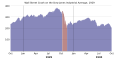 1929 Wall Street Crash graph
 -
Crowd outside NYSE
-
 Bank of the United States failure
 -
Smoot and Hawley standing together, April 11, 1929
-
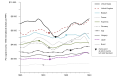 Graph charting income per capita throughout the Great Depression
 -
GDP depression
-
Woman Factory 1940s
-
 Money supply during the great depression era
 -
 CPI 1914-2022
 -
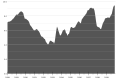 1930 Industry


Medical Disclaimer: WikiMD is for informational purposes only and is not a substitute for professional medical advice. Content may be inaccurate or outdated and should not be used for diagnosis or treatment. Always consult your healthcare provider for medical decisions. Verify information with trusted sources such as CDC.gov and NIH.gov. By using this site, you agree that WikiMD is not liable for any outcomes related to its content. See full disclaimer.
Credits:Most images are courtesy of Wikimedia commons, and templates, categories Wikipedia, licensed under CC BY SA or similar.
Translate page: - East Asian
中文,
日本,
한국어,
South Asian
हिन्दी,
தமிழ்,
తెలుగు,
Urdu,
ಕನ್ನಡ,
Southeast Asian
Indonesian,
Vietnamese,
Thai,
မြန်မာဘာသာ,
বাংলা
European
español,
Deutsch,
français,
Greek,
português do Brasil,
polski,
română,
русский,
Nederlands,
norsk,
svenska,
suomi,
Italian
Middle Eastern & African
عربى,
Turkish,
Persian,
Hebrew,
Afrikaans,
isiZulu,
Kiswahili,
Other
Bulgarian,
Hungarian,
Czech,
Swedish,
മലയാളം,
मराठी,
ਪੰਜਾਬੀ,
ગુજરાતી,
Portuguese,
Ukrainian


