Hủ tiếu
Hủ tiếu is a popular noodle soup dish in Vietnam. It is often considered a staple in the country's southern region, particularly in Saigon, and is also widely enjoyed in other parts of the world where Vietnamese communities exist.
Origins[edit]
Hủ tiếu has its roots in China, specifically the Chaozhou region. The dish was brought to Vietnam by Chinese immigrants and has since been adapted to suit local tastes. The name "hủ tiếu" is derived from the Teochew word "kway teow", which refers to rice noodles.
Ingredients[edit]
The main ingredients in hủ tiếu are rice noodles, broth, and various types of meat. The broth is typically made from pork bones, dried squid, and other seasonings, and is simmered for several hours to develop a rich flavor. The noodles used are either thin or thick, depending on personal preference. Common meats include pork, shrimp, and sometimes squid or fish. The dish is often garnished with herbs like cilantro and green onions, and served with lime wedges, chili sauce, and soy sauce on the side.
Variations[edit]
There are several variations of hủ tiếu, each with its own unique characteristics. Some of the most popular include:
- Hủ tiếu Nam Vang: This version is named after Phnom Penh, the capital of Cambodia, and features a clear pork-based broth, ground pork, shrimp, and offal. It is often served with a side of fresh herbs and bean sprouts.
- Hủ tiếu Mỹ Tho: Named after the city of My Tho in the Mekong Delta, this variation is known for its chewy noodles and rich broth. It typically includes sliced pork, shrimp, and quail eggs.
- Hủ tiếu Saigon: This is a dry version of the dish, where the broth is served separately. The noodles are mixed with a soy-based sauce and topped with various meats and herbs.
Cultural Significance[edit]
Hủ tiếu is not just a beloved dish in Vietnam, but also a symbol of the country's cultural diversity and history of immigration. Its Chinese origins and Cambodian influences reflect the rich tapestry of cultures that have shaped Vietnamese cuisine over the centuries.


-
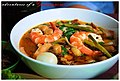 Hu Tieu Nam Vang
 -
 Hủ tiếu Nam Vang
 -
 Hủ tiếu Nam Vang Sài Gòn
 -
 Hủ tiếu thập cẩm


Medical Disclaimer: WikiMD is for informational purposes only and is not a substitute for professional medical advice. Content may be inaccurate or outdated and should not be used for diagnosis or treatment. Always consult your healthcare provider for medical decisions. Verify information with trusted sources such as CDC.gov and NIH.gov. By using this site, you agree that WikiMD is not liable for any outcomes related to its content. See full disclaimer.
Credits:Most images are courtesy of Wikimedia commons, and templates, categories Wikipedia, licensed under CC BY SA or similar.
Translate page: - East Asian
中文,
日本,
한국어,
South Asian
हिन्दी,
தமிழ்,
తెలుగు,
Urdu,
ಕನ್ನಡ,
Southeast Asian
Indonesian,
Vietnamese,
Thai,
မြန်မာဘာသာ,
বাংলা
European
español,
Deutsch,
français,
Greek,
português do Brasil,
polski,
română,
русский,
Nederlands,
norsk,
svenska,
suomi,
Italian
Middle Eastern & African
عربى,
Turkish,
Persian,
Hebrew,
Afrikaans,
isiZulu,
Kiswahili,
Other
Bulgarian,
Hungarian,
Czech,
Swedish,
മലയാളം,
मराठी,
ਪੰਜਾਬੀ,
ગુજરાતી,
Portuguese,
Ukrainian

