IRF3
IRF3 or Interferon Regulatory Factor 3 is a protein that in humans is encoded by the IRF3 gene. It is a member of the interferon regulatory transcription factor (IRF) family. IRF3 was originally discovered as a homolog of IRF1 and IRF2. It is found in an inactive cytoplasmic form that upon serine/threonine phosphorylation forms a complex with CREBBP. This complex translocates to the nucleus and activates the transcription of interferons alpha and beta, as well as other interferon-induced genes.
Function[edit]
IRF3 is a key transcription factor involved in the induction of interferon (IFN) in response to viral infection. It is activated by a variety of viruses, including herpes simplex virus, vesicular stomatitis virus, and Sendai virus. Upon activation, IRF3 translocates to the nucleus and binds to the IFN-stimulated response element (ISRE) in the promoter of IFN genes, leading to the production of IFN and the activation of IFN-stimulated genes.
Clinical significance[edit]
Mutations in the IRF3 gene have been associated with susceptibility to herpes simplex encephalitis, a rare complication of herpes simplex virus infection. Additionally, IRF3 has been implicated in the immune response to SARS-CoV-2, the virus that causes COVID-19. Studies have shown that SARS-CoV-2 can inhibit the activation of IRF3, thereby suppressing the production of IFN and evading the immune response.
See also[edit]
References[edit]
External links[edit]
- IRF3 at the National Center for Biotechnology Information

This WikiMD article can only be edited by registered and verified editors. You can log in or register.
IRF3[edit]
-
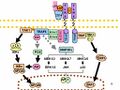 Toll-like receptor pathways revised


Medical Disclaimer: WikiMD is for informational purposes only and is not a substitute for professional medical advice. Content may be inaccurate or outdated and should not be used for diagnosis or treatment. Always consult your healthcare provider for medical decisions. Verify information with trusted sources such as CDC.gov and NIH.gov. By using this site, you agree that WikiMD is not liable for any outcomes related to its content. See full disclaimer.
Credits:Most images are courtesy of Wikimedia commons, and templates, categories Wikipedia, licensed under CC BY SA or similar.
Translate page: - East Asian
中文,
日本,
한국어,
South Asian
हिन्दी,
தமிழ்,
తెలుగు,
Urdu,
ಕನ್ನಡ,
Southeast Asian
Indonesian,
Vietnamese,
Thai,
မြန်မာဘာသာ,
বাংলা
European
español,
Deutsch,
français,
Greek,
português do Brasil,
polski,
română,
русский,
Nederlands,
norsk,
svenska,
suomi,
Italian
Middle Eastern & African
عربى,
Turkish,
Persian,
Hebrew,
Afrikaans,
isiZulu,
Kiswahili,
Other
Bulgarian,
Hungarian,
Czech,
Swedish,
മലയാളം,
मराठी,
ਪੰਜਾਬੀ,
ગુજરાતી,
Portuguese,
Ukrainian

