Mahatma Gandhi
Mahatma Gandhi (2 October 1869 – 30 January 1948), also known as Mohandas Karamchand Gandhi, was a prominent leader of the Indian National Congress and a pivotal figure in the Indian independence movement. He is widely recognized for his philosophy of nonviolent resistance, which he called "Satyagraha".
Early Life[edit]
Gandhi was born in Porbandar, a coastal town in present-day Gujarat, India. His father, Karamchand Gandhi, served as the diwan (chief minister) of Porbandar state. His mother, Putlibai, was a deeply religious woman who influenced Gandhi's commitment to Ahimsa (non-violence).
Education[edit]
Gandhi studied law at the Inner Temple, one of the four Inns of Court in London. After completing his studies, he returned to India and started a law practice in Bombay.
Role in Indian Independence Movement[edit]
Gandhi became a leading figure in the Indian independence movement after his return from South Africa. He led the Salt March in 1930, a nonviolent protest against the British salt tax. He also led the Quit India Movement in 1942, calling for the end of British rule in India.
Philosophy[edit]
Gandhi's philosophy of nonviolent resistance, known as Satyagraha, was based on the principles of truth and non-violence. He believed in simple living and self-sufficiency, and advocated for the rights of the poor and the marginalized.
Legacy[edit]
Gandhi's philosophy and methods of nonviolent resistance have inspired many social and political movements worldwide. He is remembered as the "Father of the Nation" in India.
See Also[edit]
- Indian National Congress
- Indian independence movement
- Salt March
- Quit India Movement
- Ahimsa
- Satyagraha
References[edit]
| Person Data | ||||||||||
|---|---|---|---|---|---|---|---|---|---|---|
|
 | This Indian biographical article is a stub. You can help WikiMD by expanding the page. |
Mahatma Gandhi[edit]
-
Mahatma Gandhi, studio, 1931
-
Mohandas K Gandhi, age 7
-
Gandhi and Laxmidas
-
Mahatma Gandhi 1869-1948 lived here as a law student
-
Gandhi student
-
Gandhi 1890
-
Natal Indian Congress
-
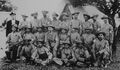 Gandhi Boer War
 -
Gandhi and Kasturbhai 1902
-
Indian opinion advertisement in 1910
-
Gandhi suit
-
Gandhi Kheda 1918


Medical Disclaimer: WikiMD is for informational purposes only and is not a substitute for professional medical advice. Content may be inaccurate or outdated and should not be used for diagnosis or treatment. Always consult your healthcare provider for medical decisions. Verify information with trusted sources such as CDC.gov and NIH.gov. By using this site, you agree that WikiMD is not liable for any outcomes related to its content. See full disclaimer.
Credits:Most images are courtesy of Wikimedia commons, and templates, categories Wikipedia, licensed under CC BY SA or similar.
Translate page: - East Asian
中文,
日本,
한국어,
South Asian
हिन्दी,
தமிழ்,
తెలుగు,
Urdu,
ಕನ್ನಡ,
Southeast Asian
Indonesian,
Vietnamese,
Thai,
မြန်မာဘာသာ,
বাংলা
European
español,
Deutsch,
français,
Greek,
português do Brasil,
polski,
română,
русский,
Nederlands,
norsk,
svenska,
suomi,
Italian
Middle Eastern & African
عربى,
Turkish,
Persian,
Hebrew,
Afrikaans,
isiZulu,
Kiswahili,
Other
Bulgarian,
Hungarian,
Czech,
Swedish,
മലയാളം,
मराठी,
ਪੰਜਾਬੀ,
ગુજરાતી,
Portuguese,
Ukrainian


