Molecular genetics
Molecular genetics is a sub-field of biology that addresses how differences in the structures or expressions of DNA molecules manifests as variation among organisms. Molecular genetics often applies an "investigative approach" to determine the structure and/or function of genes in an organism's genome using genetic screens. The field of study is based on the combination of several sub-fields in biology: genetics, biochemistry, and molecular biology. Molecular genetics is a powerful methodology for linking mutations to genetic conditions that may aid the search for a cure for various genetic diseases.
History[edit]
The term "molecular genetics" sometimes refers to a fundamental theory alleging that genes direct the production of proteins, first made explicit by George Beadle and Edward Tatum in 1941. Their work and the work of others (including Max Delbrück, Alfred Hershey, and Salvador Luria) led to the development of the central dogma of molecular biology in 1958.
Techniques[edit]
Molecular genetics uses the techniques of genetics and molecular biology. These techniques include:
- Polymerase chain reaction (PCR)
- Gel electrophoresis
- Macromolecule blotting and probing
- Microarrays
- Allele-specific oligonucleotide
- Southern blot
Applications[edit]
Molecular genetics can be used to study the function of any set of genes associated with a disease. This includes the genes for Parkinson's disease, Alzheimer's disease, Huntington's disease, and many other forms of cancer.
See also[edit]
- Genomics
- Genetic recombination
- Genetic code
- Gene therapy
- Molecular biology
- Molecular cloning
- Molecular evolution
References[edit]

This WikiMD article can only be edited by registered and verified editors. You can log in or register.
-
 Extended Central Dogma with Enzymes
 -
 Forward Mutagenesis
 -
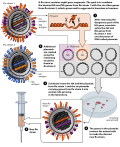 Reverse Genetics Flu


Medical Disclaimer: WikiMD is for informational purposes only and is not a substitute for professional medical advice. Content may be inaccurate or outdated and should not be used for diagnosis or treatment. Always consult your healthcare provider for medical decisions. Verify information with trusted sources such as CDC.gov and NIH.gov. By using this site, you agree that WikiMD is not liable for any outcomes related to its content. See full disclaimer.
Credits:Most images are courtesy of Wikimedia commons, and templates, categories Wikipedia, licensed under CC BY SA or similar.
Translate page: - East Asian
中文,
日本,
한국어,
South Asian
हिन्दी,
தமிழ்,
తెలుగు,
Urdu,
ಕನ್ನಡ,
Southeast Asian
Indonesian,
Vietnamese,
Thai,
မြန်မာဘာသာ,
বাংলা
European
español,
Deutsch,
français,
Greek,
português do Brasil,
polski,
română,
русский,
Nederlands,
norsk,
svenska,
suomi,
Italian
Middle Eastern & African
عربى,
Turkish,
Persian,
Hebrew,
Afrikaans,
isiZulu,
Kiswahili,
Other
Bulgarian,
Hungarian,
Czech,
Swedish,
മലയാളം,
मराठी,
ਪੰਜਾਬੀ,
ગુજરાતી,
Portuguese,
Ukrainian

