Nitrogen oxide
Nitrogen oxide (also known as NOx) refers to a group of chemically reactive gases that contain nitrogen and oxygen in varying amounts. Many of the nitrogen oxides are colorless and odorless. However, one common pollutant, nitrogen dioxide (NO2) along with particles in the air can often be seen as a reddish-brown layer over many urban areas.
Sources and Production[edit]
Nitrogen oxides are produced during combustion, especially at high temperature. These can be produced naturally through lightning and biological processes in soils. Human activities, such as the burning of fossil fuels in vehicles, power plants and industrial processes, are the primary source of nitrogen oxides.
Health Effects[edit]
Exposure to nitrogen oxides can cause a range of harmful effects on the lungs, including increased inflammation, altered lung function, and increased susceptibility to allergens. Long-term exposure can lead to the development of respiratory diseases.
Environmental Impact[edit]
Nitrogen oxides play a major role in atmospheric reactions that produce ground-level ozone, or smog. They also contribute to the formation of acid rain and particulate matter, which can have harmful effects on ecosystems and materials.
Control Measures[edit]
Various strategies can be used to reduce the emissions of nitrogen oxides, including improving combustion efficiency, using low-nitrogen fuels, and installing post-combustion control devices.
See Also[edit]

This WikiMD article can only be edited by registered and verified editors. You can log in or register.
-
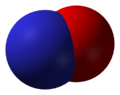 Nitric oxide
 -
Nitrogen dioxide
-
Nitrous oxide
-
Dinitrogen trioxide
-
Dinitrogen tetroxide
-
Dinitrogen pentoxide
-
Trinitramide


Medical Disclaimer: WikiMD is for informational purposes only and is not a substitute for professional medical advice. Content may be inaccurate or outdated and should not be used for diagnosis or treatment. Always consult your healthcare provider for medical decisions. Verify information with trusted sources such as CDC.gov and NIH.gov. By using this site, you agree that WikiMD is not liable for any outcomes related to its content. See full disclaimer.
Credits:Most images are courtesy of Wikimedia commons, and templates, categories Wikipedia, licensed under CC BY SA or similar.
Translate page: - East Asian
中文,
日本,
한국어,
South Asian
हिन्दी,
தமிழ்,
తెలుగు,
Urdu,
ಕನ್ನಡ,
Southeast Asian
Indonesian,
Vietnamese,
Thai,
မြန်မာဘာသာ,
বাংলা
European
español,
Deutsch,
français,
Greek,
português do Brasil,
polski,
română,
русский,
Nederlands,
norsk,
svenska,
suomi,
Italian
Middle Eastern & African
عربى,
Turkish,
Persian,
Hebrew,
Afrikaans,
isiZulu,
Kiswahili,
Other
Bulgarian,
Hungarian,
Czech,
Swedish,
മലയാളം,
मराठी,
ਪੰਜਾਬੀ,
ગુજરાતી,
Portuguese,
Ukrainian


