Oropharyngeal airway
Oropharyngeal airway is a medical device used to maintain or open a patient's airway. It does this by preventing the tongue from covering the epiglottis, which could prevent the person from breathing. When a person becomes unconscious, the muscles in their jaw relax and can allow the tongue to obstruct the airway.
Indications[edit]
The oropharyngeal airway is used in situations where the patient is unconscious or semi-conscious and there is a risk of the airway becoming blocked. This could be due to the tongue relaxing and falling back into the throat, or due to the presence of other obstructions such as vomit or blood.
Contraindications[edit]
The use of an oropharyngeal airway is contraindicated in patients who are conscious or semi-conscious and have a gag reflex, as it may stimulate vomiting or cause trauma to the throat.
Procedure[edit]
The oropharyngeal airway is inserted into the mouth and advanced until it lies in the pharynx. The device is designed to sit over the tongue, keeping it out of the way and allowing air to pass freely into the lungs.
Complications[edit]
Possible complications of using an oropharyngeal airway include injury to the mouth or throat, vomiting if the patient has a gag reflex, and the device becoming blocked by blood or other fluids.
See Also[edit]

This WikiMD article can only be edited by registered and verified editors. You can log in or register.
-
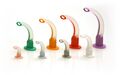 One-piece Guedel Airways
 -
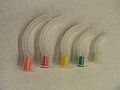 Canule de Goedel
 -
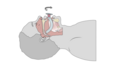 Oral pharyngeal airway (OPA) insertion


_insertion.png)

Medical Disclaimer: WikiMD is for informational purposes only and is not a substitute for professional medical advice. Content may be inaccurate or outdated and should not be used for diagnosis or treatment. Always consult your healthcare provider for medical decisions. Verify information with trusted sources such as CDC.gov and NIH.gov. By using this site, you agree that WikiMD is not liable for any outcomes related to its content. See full disclaimer.
Credits:Most images are courtesy of Wikimedia commons, and templates, categories Wikipedia, licensed under CC BY SA or similar.
Translate page: - East Asian
中文,
日本,
한국어,
South Asian
हिन्दी,
தமிழ்,
తెలుగు,
Urdu,
ಕನ್ನಡ,
Southeast Asian
Indonesian,
Vietnamese,
Thai,
မြန်မာဘာသာ,
বাংলা
European
español,
Deutsch,
français,
Greek,
português do Brasil,
polski,
română,
русский,
Nederlands,
norsk,
svenska,
suomi,
Italian
Middle Eastern & African
عربى,
Turkish,
Persian,
Hebrew,
Afrikaans,
isiZulu,
Kiswahili,
Other
Bulgarian,
Hungarian,
Czech,
Swedish,
മലയാളം,
मराठी,
ਪੰਜਾਬੀ,
ગુજરાતી,
Portuguese,
Ukrainian

