Substituted piperazine
Substituted piperazine is a class of organic compounds that contain a piperazine functional group. Piperazine is a cyclic amine with two nitrogen atoms in the ring. Substituted piperazines are piperazine molecules that have been modified by the addition of other functional groups.
Structure and properties[edit]
The basic structure of a piperazine molecule is a six-membered ring with two nitrogen atoms at opposite positions in the ring. The remaining four positions are occupied by hydrogen atoms. In a substituted piperazine, one or more of these hydrogen atoms is replaced by a different functional group.
Substituted piperazines can exhibit a wide range of physical and chemical properties, depending on the nature of the substituent groups. For example, they can be hydrophilic or hydrophobic, and they can have different levels of acidity and basicity.
Synthesis[edit]
Substituted piperazines can be synthesized through several methods. One common method is the reaction of a halogenated compound with piperazine. Another method is the acylation of piperazine with an acyl chloride or an acid anhydride.
Applications[edit]
Substituted piperazines have a wide range of applications. They are used in the synthesis of pharmaceuticals, including antidepressants, antipsychotics, and antihistamines. They are also used in the production of pesticides and plastics.
See also[edit]
References[edit]

- Substituted_piperazine
-
Benzylpiperazine
-
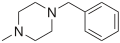 Methylbenzylpiperazine
 -
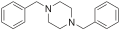 DBZP
DBZP -
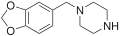 MDBZP
MDBZP -
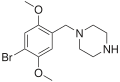 2C-B-BZP
 -
 Methoxypiperamide
 -
 Sunifiram
 -
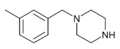 3-Methylbenzylpiperazine
 -
 Befuraline
 -
 Fipexide
 -
 Piberaline
 -
 Dichlorophenylpiperazine


Medical Disclaimer: WikiMD is for informational purposes only and is not a substitute for professional medical advice. Content may be inaccurate or outdated and should not be used for diagnosis or treatment. Always consult your healthcare provider for medical decisions. Verify information with trusted sources such as CDC.gov and NIH.gov. By using this site, you agree that WikiMD is not liable for any outcomes related to its content. See full disclaimer.
Credits:Most images are courtesy of Wikimedia commons, and templates, categories Wikipedia, licensed under CC BY SA or similar.
Translate page: - East Asian
中文,
日本,
한국어,
South Asian
हिन्दी,
தமிழ்,
తెలుగు,
Urdu,
ಕನ್ನಡ,
Southeast Asian
Indonesian,
Vietnamese,
Thai,
မြန်မာဘာသာ,
বাংলা
European
español,
Deutsch,
français,
Greek,
português do Brasil,
polski,
română,
русский,
Nederlands,
norsk,
svenska,
suomi,
Italian
Middle Eastern & African
عربى,
Turkish,
Persian,
Hebrew,
Afrikaans,
isiZulu,
Kiswahili,
Other
Bulgarian,
Hungarian,
Czech,
Swedish,
മലയാളം,
मराठी,
ਪੰਜਾਬੀ,
ગુજરાતી,
Portuguese,
Ukrainian


