Pistacia lentiscus
Pistacia lentiscus (also known as mastic) is an evergreen shrub or small tree in the Pistacia genus, which belongs to the Anacardiaceae family. It is native to the Mediterranean region, from Morocco and Iberian peninsula in the west through southern France and Turkey to Iran and the Canary Islands in the east.
Description[edit]
Pistacia lentiscus is a dioecious evergreen shrub or small tree, which can reach heights of up to 4 meters (13 ft). The leaves are compound, 10–20 cm (3.9–7.9 in) long, and alternate, with 5-10 leaflets. The flowers are small, with five petals, and produced in clusters. The fruit is a small, round drupe, red to black when ripe.
Cultivation and uses[edit]
Pistacia lentiscus is cultivated for its aromatic resin, mainly on the Greek island of Chios. The resin, known as mastic, is harvested by making small cuts in the bark to allow the resin to seep out. It is used in the production of a Greek liquor called Mastiha, and is also used in cooking, in pharmaceuticals, and as a varnish for furniture.
Ecology[edit]
Pistacia lentiscus is well adapted to the conditions of the Mediterranean region, including its dry summers and mild, wet winters. It is a characteristic species of the Mediterranean forest, and is also found in maquis shrubland and garrigue.
See also[edit]
References[edit]

This flora-related article is a stub. You can help WikiMD by expanding it.
-
Pistacia lentiscus
-
Pistacia lentiscus
-
Pistacia lentiscus
-
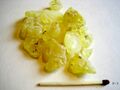 Mastic resin from Pistacia lentiscus


Medical Disclaimer: WikiMD is for informational purposes only and is not a substitute for professional medical advice. Content may be inaccurate or outdated and should not be used for diagnosis or treatment. Always consult your healthcare provider for medical decisions. Verify information with trusted sources such as CDC.gov and NIH.gov. By using this site, you agree that WikiMD is not liable for any outcomes related to its content. See full disclaimer.
Credits:Most images are courtesy of Wikimedia commons, and templates, categories Wikipedia, licensed under CC BY SA or similar.
Translate page: - East Asian
中文,
日本,
한국어,
South Asian
हिन्दी,
தமிழ்,
తెలుగు,
Urdu,
ಕನ್ನಡ,
Southeast Asian
Indonesian,
Vietnamese,
Thai,
မြန်မာဘာသာ,
বাংলা
European
español,
Deutsch,
français,
Greek,
português do Brasil,
polski,
română,
русский,
Nederlands,
norsk,
svenska,
suomi,
Italian
Middle Eastern & African
عربى,
Turkish,
Persian,
Hebrew,
Afrikaans,
isiZulu,
Kiswahili,
Other
Bulgarian,
Hungarian,
Czech,
Swedish,
മലയാളം,
मराठी,
ਪੰਜਾਬੀ,
ગુજરાતી,
Portuguese,
Ukrainian


