Post-mortem interval
Post-mortem interval (PMI) is the time that has elapsed since a person has died. If the time in question is not known, a number of medical/scientific techniques are used to determine it. This also can refer to the stage of decomposition of the body.
Definition[edit]
The Post-mortem interval is the time that has elapsed since a person has died. If the time in question is not known, a number of medical/scientific techniques are used to determine it. This also can refer to the stage of decomposition of the body.
Estimation[edit]
Estimation of the post-mortem interval is a major task in forensic pathology. This is important in cases of suspicious deaths, as information about the post-mortem interval can provide critical evidence to help determine if a crime has been committed.
Methods of Estimation[edit]
There are several methods used to estimate the post-mortem interval:
- Rigor mortis: This is the stiffening of the body after death due to a biochemical process in the muscles. It can begin as soon as 4 hours after death and last up to 72 hours.
- Livor mortis: This is the settling of the blood in the lower (dependent) portion of the body, causing a purplish red discoloration of the skin. It can begin as soon as 20 minutes after death and last up to 16 hours.
- Algor mortis: This is the reduction in body temperature following death. This is a complex process affected by many variables.
- Decomposition: This is the breakdown of the body tissues after death. It can be influenced by many factors including temperature, humidity, and the presence of insects.
- Forensic entomology: This is the study of insects for medico-legal purposes. It can be used to estimate the post-mortem interval by studying the life cycle of insects that are present on the body.
See Also[edit]

This WikiMD article can only be edited by registered and verified editors. You can log in or register.
Post-mortem interval[edit]
-
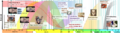 Stages of death changes
 -
Post-mortem interval
.png)

Medical Disclaimer: WikiMD is for informational purposes only and is not a substitute for professional medical advice. Content may be inaccurate or outdated and should not be used for diagnosis or treatment. Always consult your healthcare provider for medical decisions. Verify information with trusted sources such as CDC.gov and NIH.gov. By using this site, you agree that WikiMD is not liable for any outcomes related to its content. See full disclaimer.
Credits:Most images are courtesy of Wikimedia commons, and templates, categories Wikipedia, licensed under CC BY SA or similar.
Translate page: - East Asian
中文,
日本,
한국어,
South Asian
हिन्दी,
தமிழ்,
తెలుగు,
Urdu,
ಕನ್ನಡ,
Southeast Asian
Indonesian,
Vietnamese,
Thai,
မြန်မာဘာသာ,
বাংলা
European
español,
Deutsch,
français,
Greek,
português do Brasil,
polski,
română,
русский,
Nederlands,
norsk,
svenska,
suomi,
Italian
Middle Eastern & African
عربى,
Turkish,
Persian,
Hebrew,
Afrikaans,
isiZulu,
Kiswahili,
Other
Bulgarian,
Hungarian,
Czech,
Swedish,
മലയാളം,
मराठी,
ਪੰਜਾਬੀ,
ગુજરાતી,
Portuguese,
Ukrainian


.jpg)