Propyphenazone
Propyphenazone is a derivative of phenazone with similar analgesic and antipyretic effects. It is used in combination with other substances such as paracetamol to enhance the pain-relieving effects. Propyphenazone is not widely used due to its potential for causing blood disorders.
History[edit]
Propyphenazone was first synthesized in the late 19th century and was used for many years as a common analgesic. However, it has been largely replaced by safer and more effective drugs.
Pharmacology[edit]
Propyphenazone is a non-steroidal anti-inflammatory drug (NSAID). It works by reducing the production of prostaglandins, chemicals that cause pain, fever, and inflammation.
Side Effects[edit]
The most common side effects of propyphenazone include nausea, vomiting, and stomach pain. In rare cases, it can cause serious blood disorders such as agranulocytosis and aplastic anemia.
Contraindications[edit]
Propyphenazone should not be used by people with a history of blood disorders, peptic ulcers, or allergic reactions to other NSAIDs. It should also be avoided during pregnancy and breastfeeding.
Legal Status[edit]
In some countries, propyphenazone is available over-the-counter, while in others it is a prescription-only medication. It has been banned in several countries due to its potential for causing blood disorders.
See Also[edit]

This WikiMD article can only be edited by registered and verified editors. You can log in or register.
-
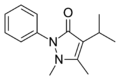 2D Skeletal Structure of Propyphenazone
 -
Saridon by Hoffmann-La Roche
-
Synthesis of Propyphenazone


Medical Disclaimer: WikiMD is for informational purposes only and is not a substitute for professional medical advice. Content may be inaccurate or outdated and should not be used for diagnosis or treatment. Always consult your healthcare provider for medical decisions. Verify information with trusted sources such as CDC.gov and NIH.gov. By using this site, you agree that WikiMD is not liable for any outcomes related to its content. See full disclaimer.
Credits:Most images are courtesy of Wikimedia commons, and templates, categories Wikipedia, licensed under CC BY SA or similar.
Translate page: - East Asian
中文,
日本,
한국어,
South Asian
हिन्दी,
தமிழ்,
తెలుగు,
Urdu,
ಕನ್ನಡ,
Southeast Asian
Indonesian,
Vietnamese,
Thai,
မြန်မာဘာသာ,
বাংলা
European
español,
Deutsch,
français,
Greek,
português do Brasil,
polski,
română,
русский,
Nederlands,
norsk,
svenska,
suomi,
Italian
Middle Eastern & African
عربى,
Turkish,
Persian,
Hebrew,
Afrikaans,
isiZulu,
Kiswahili,
Other
Bulgarian,
Hungarian,
Czech,
Swedish,
മലയാളം,
मराठी,
ਪੰਜਾਬੀ,
ગુજરાતી,
Portuguese,
Ukrainian


