Ribostamycin
Ribostamycin is an aminoglycoside antibiotic that is derived from Streptomyces ribosidificus. It is used in the treatment of various bacterial infections, particularly those caused by Gram-negative bacteria. Ribostamycin works by binding to the bacterial ribosome, inhibiting protein synthesis and thereby killing the bacteria.
History[edit]
Ribostamycin was first isolated in 1968 from Streptomyces ribosidificus, a species of actinobacteria that is found in soil. The discovery of ribostamycin was part of a larger effort to find new antibiotics that could be used to treat drug-resistant bacterial infections.
Medical uses[edit]
Ribostamycin is used to treat a variety of bacterial infections, including urinary tract infections, respiratory tract infections, and skin infections. It is particularly effective against Gram-negative bacteria, such as Escherichia coli and Klebsiella pneumoniae.
Mechanism of action[edit]
Ribostamycin works by binding to the 30S subunit of the bacterial ribosome, inhibiting protein synthesis. This prevents the bacteria from growing and reproducing, effectively killing them.
Side effects[edit]
Like other aminoglycoside antibiotics, ribostamycin can cause ototoxicity and nephrotoxicity. Other potential side effects include allergic reactions and gastrointestinal distress.
See also[edit]

This WikiMD article can only be edited by registered and verified editors. You can log in or register.
-
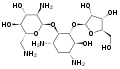 Ribostamycin
 -
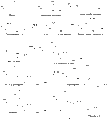 Ribostamycin Proposed Biosynthesis


Medical Disclaimer: WikiMD is for informational purposes only and is not a substitute for professional medical advice. Content may be inaccurate or outdated and should not be used for diagnosis or treatment. Always consult your healthcare provider for medical decisions. Verify information with trusted sources such as CDC.gov and NIH.gov. By using this site, you agree that WikiMD is not liable for any outcomes related to its content. See full disclaimer.
Credits:Most images are courtesy of Wikimedia commons, and templates, categories Wikipedia, licensed under CC BY SA or similar.
Translate page: - East Asian
中文,
日本,
한국어,
South Asian
हिन्दी,
தமிழ்,
తెలుగు,
Urdu,
ಕನ್ನಡ,
Southeast Asian
Indonesian,
Vietnamese,
Thai,
မြန်မာဘာသာ,
বাংলা
European
español,
Deutsch,
français,
Greek,
português do Brasil,
polski,
română,
русский,
Nederlands,
norsk,
svenska,
suomi,
Italian
Middle Eastern & African
عربى,
Turkish,
Persian,
Hebrew,
Afrikaans,
isiZulu,
Kiswahili,
Other
Bulgarian,
Hungarian,
Czech,
Swedish,
മലയാളം,
मराठी,
ਪੰਜਾਬੀ,
ગુજરાતી,
Portuguese,
Ukrainian

