Rickettsiales
Rickettsiales is an order of Gram-negative bacteria. This order includes important human pathogens such as Rickettsia rickettsii, which causes Rocky Mountain spotted fever, and Orientia tsutsugamushi, the causative agent of scrub typhus.
Taxonomy[edit]
The order Rickettsiales is divided into four families: Anaplasmataceae, Rickettsiaceae, Holosporaceae, and Candidatus Midichloriaceae. The family Anaplasmataceae includes the genera Anaplasma, Ehrlichia, Neorickettsia, and Wolbachia. The family Rickettsiaceae includes the genera Rickettsia and Orientia. The family Holosporaceae includes the genera Holospora, Caedibacter, and Paracaedibacter. The family Candidatus Midichloriaceae includes the genus Candidatus Midichloria.
Pathogenesis[edit]
Rickettsiales are obligate intracellular parasites, meaning they can only survive and reproduce inside host cells. They are typically transmitted to humans through the bite of an infected tick, flea, or louse. Once inside the host, they invade the endothelial cells lining the blood vessels, causing vasculitis and leading to symptoms such as fever, rash, and headache.
Diagnosis and Treatment[edit]
Diagnosis of Rickettsiales infections is usually based on clinical symptoms and confirmed by laboratory tests such as serology or PCR. Treatment typically involves antibiotics such as doxycycline or chloramphenicol.
Prevention[edit]
Prevention of Rickettsiales infections primarily involves avoiding contact with the vectors that transmit these bacteria. This can be achieved through the use of insect repellents, wearing long sleeves and pants when in tick-infested areas, and checking for and removing ticks promptly after outdoor activities.
See Also[edit]

This WikiMD article can only be edited by registered and verified editors. You can log in or register.
Rickettsiales[edit]
-
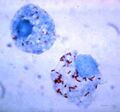 Rickettsia rickettsii


Medical Disclaimer: WikiMD is for informational purposes only and is not a substitute for professional medical advice. Content may be inaccurate or outdated and should not be used for diagnosis or treatment. Always consult your healthcare provider for medical decisions. Verify information with trusted sources such as CDC.gov and NIH.gov. By using this site, you agree that WikiMD is not liable for any outcomes related to its content. See full disclaimer.
Credits:Most images are courtesy of Wikimedia commons, and templates, categories Wikipedia, licensed under CC BY SA or similar.
Translate page: - East Asian
中文,
日本,
한국어,
South Asian
हिन्दी,
தமிழ்,
తెలుగు,
Urdu,
ಕನ್ನಡ,
Southeast Asian
Indonesian,
Vietnamese,
Thai,
မြန်မာဘာသာ,
বাংলা
European
español,
Deutsch,
français,
Greek,
português do Brasil,
polski,
română,
русский,
Nederlands,
norsk,
svenska,
suomi,
Italian
Middle Eastern & African
عربى,
Turkish,
Persian,
Hebrew,
Afrikaans,
isiZulu,
Kiswahili,
Other
Bulgarian,
Hungarian,
Czech,
Swedish,
മലയാളം,
मराठी,
ਪੰਜਾਬੀ,
ગુજરાતી,
Portuguese,
Ukrainian

