Saccharomyces
Saccharomyces is a genus of fungi that includes many species of yeasts. Saccharomyces is derived from Greek, and means 'sugar fungus'. Most are not pathogenic to humans, but they are very important in the food and beverage industry, as well as in biochemistry and biotechnology.
Taxonomy[edit]
The genus Saccharomyces is in the kingdom Fungi, phylum Ascomycota, class Saccharomycetes, order Saccharomycetales, and family Saccharomycetaceae.
Species[edit]
There are many species of Saccharomyces, but the most well-known and widely studied is Saccharomyces cerevisiae, which is used in baking and brewing. Other species include Saccharomyces pastorianus, Saccharomyces bayanus, and Saccharomyces paradoxus.
Uses[edit]
Saccharomyces species, particularly S. cerevisiae, are used in baking to leaven bread and in brewing to ferment sugars to alcohol. They are also used in the production of bioethanol, a renewable energy source. In addition, they are important model organisms in biochemistry and biotechnology.
Health[edit]
While most Saccharomyces species are not pathogenic to humans, some can cause infections in immunocompromised individuals. Saccharomyces boulardii is a probiotic yeast that can help maintain gut health.
See also[edit]

This WikiMD article can only be edited by registered and verified editors. You can log in or register.
Saccharomyces[edit]
-
 Saccharomyces
 -
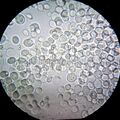 Saccharomyces


Medical Disclaimer: WikiMD is for informational purposes only and is not a substitute for professional medical advice. Content may be inaccurate or outdated and should not be used for diagnosis or treatment. Always consult your healthcare provider for medical decisions. Verify information with trusted sources such as CDC.gov and NIH.gov. By using this site, you agree that WikiMD is not liable for any outcomes related to its content. See full disclaimer.
Credits:Most images are courtesy of Wikimedia commons, and templates, categories Wikipedia, licensed under CC BY SA or similar.
Translate page: - East Asian
中文,
日本,
한국어,
South Asian
हिन्दी,
தமிழ்,
తెలుగు,
Urdu,
ಕನ್ನಡ,
Southeast Asian
Indonesian,
Vietnamese,
Thai,
မြန်မာဘာသာ,
বাংলা
European
español,
Deutsch,
français,
Greek,
português do Brasil,
polski,
română,
русский,
Nederlands,
norsk,
svenska,
suomi,
Italian
Middle Eastern & African
عربى,
Turkish,
Persian,
Hebrew,
Afrikaans,
isiZulu,
Kiswahili,
Other
Bulgarian,
Hungarian,
Czech,
Swedish,
മലയാളം,
मराठी,
ਪੰਜਾਬੀ,
ગુજરાતી,
Portuguese,
Ukrainian

