Sapindaceae
Sapindaceae is a family of flowering plants in the order Sapindales, known as the soapberry family. It contains 138 genera and 1858 known species. Members of this family are found in tropical and subtropical regions worldwide, with a few species extending into temperate zones.
Description[edit]
Members of the Sapindaceae family are trees, shrubs, or lianas. They are often characterized by their compound leaves, which are usually pinnate or palmately compound. The flowers are small and often unisexual, with a radial symmetry. The fruit is a capsule, a berry, or a drupe.
Taxonomy[edit]
The family Sapindaceae was first described by Augustin Pyramus de Candolle in 1806. It is divided into two subfamilies: Sapindoideae and Dodonaeoideae. The largest genera in the family are Serjania (215 species), Paullinia (195 species), Allophylus (170 species), and Dodonaea (70 species).
Distribution and habitat[edit]
Sapindaceae species are found in tropical and subtropical regions worldwide. They are particularly diverse in South America and Madagascar. A few species, such as Acer (maple) and Aesculus (horse chestnut and buckeye), are found in temperate zones.
Uses[edit]
Many species in the Sapindaceae family have economic importance. For example, Litchi chinensis (lychee), Dimocarpus longan (longan), and Nephelium lappaceum (rambutan) are cultivated for their edible fruit. Paullinia cupana (guaraná) is used to produce a stimulant drink. Acer saccharum (sugar maple) is tapped for its sap, which is boiled down to produce maple syrup.
See also[edit]
References[edit]

This WikiMD article can only be edited by registered and verified editors. You can log in or register.
Sapindaceae[edit]
-
 Lychee
 -
 Dodonaea viscosa (Hopbush)
 -
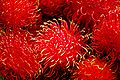 Rambutan Nephelium lappaceum
 -
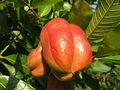 Ackee
Ackee -
 Melicoccus bijugatus
 -
 Lychee fruit
 -
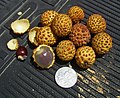 Dimocarpus longan
 -
 Essa fruta se divide em tres como o guaraná
 -
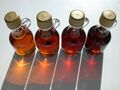 Syrup grades

_W2_IMG_1899.jpg)


.jpg)


Medical Disclaimer: WikiMD is for informational purposes only and is not a substitute for professional medical advice. Content may be inaccurate or outdated and should not be used for diagnosis or treatment. Always consult your healthcare provider for medical decisions. Verify information with trusted sources such as CDC.gov and NIH.gov. By using this site, you agree that WikiMD is not liable for any outcomes related to its content. See full disclaimer.
Credits:Most images are courtesy of Wikimedia commons, and templates, categories Wikipedia, licensed under CC BY SA or similar.
Translate page: - East Asian
中文,
日本,
한국어,
South Asian
हिन्दी,
தமிழ்,
తెలుగు,
Urdu,
ಕನ್ನಡ,
Southeast Asian
Indonesian,
Vietnamese,
Thai,
မြန်မာဘာသာ,
বাংলা
European
español,
Deutsch,
français,
Greek,
português do Brasil,
polski,
română,
русский,
Nederlands,
norsk,
svenska,
suomi,
Italian
Middle Eastern & African
عربى,
Turkish,
Persian,
Hebrew,
Afrikaans,
isiZulu,
Kiswahili,
Other
Bulgarian,
Hungarian,
Czech,
Swedish,
മലയാളം,
मराठी,
ਪੰਜਾਬੀ,
ગુજરાતી,
Portuguese,
Ukrainian

