Sciatic nerve block
Sciatic Nerve Block is a medical procedure that involves the injection of a local anesthetic into the sciatic nerve to block pain signals from reaching the brain. This procedure is often used in the treatment of sciatica, a condition characterized by pain that radiates along the path of the sciatic nerve.
Anatomy[edit]
The sciatic nerve is the largest nerve in the body, originating from the lower spine and running down the back of each leg. It controls the muscles of the lower leg and provides sensation to the thighs, legs, and soles of the feet.
Procedure[edit]
A sciatic nerve block is performed by a healthcare provider using a needle and syringe. The patient is usually lying on their stomach or side. The skin over the injection site is cleaned and numbed with a local anesthetic. Then, the healthcare provider inserts a needle through the skin and into the area around the sciatic nerve. A local anesthetic is injected, which numbs the area and blocks pain signals from traveling along the nerve to the brain.
Indications[edit]
A sciatic nerve block may be performed to relieve pain caused by sciatica, hip surgery, knee surgery, or foot surgery. It may also be used to diagnose the source of unexplained leg pain.
Risks and Complications[edit]
As with any medical procedure, there are potential risks and complications associated with a sciatic nerve block. These may include infection, bleeding, nerve damage, allergic reaction to the anesthetic, and failure of the block to relieve pain.
Aftercare[edit]
After the procedure, the patient's leg may feel numb for several hours. They should avoid putting weight on the leg until the numbness has worn off. The healthcare provider will provide specific aftercare instructions.
See Also[edit]

This WikiMD article can only be edited by registered and verified editors. You can log in or register.
-
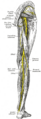 Sciatic nerve block


Medical Disclaimer: WikiMD is for informational purposes only and is not a substitute for professional medical advice. Content may be inaccurate or outdated and should not be used for diagnosis or treatment. Always consult your healthcare provider for medical decisions. Verify information with trusted sources such as CDC.gov and NIH.gov. By using this site, you agree that WikiMD is not liable for any outcomes related to its content. See full disclaimer.
Credits:Most images are courtesy of Wikimedia commons, and templates, categories Wikipedia, licensed under CC BY SA or similar.
Translate page: - East Asian
中文,
日本,
한국어,
South Asian
हिन्दी,
தமிழ்,
తెలుగు,
Urdu,
ಕನ್ನಡ,
Southeast Asian
Indonesian,
Vietnamese,
Thai,
မြန်မာဘာသာ,
বাংলা
European
español,
Deutsch,
français,
Greek,
português do Brasil,
polski,
română,
русский,
Nederlands,
norsk,
svenska,
suomi,
Italian
Middle Eastern & African
عربى,
Turkish,
Persian,
Hebrew,
Afrikaans,
isiZulu,
Kiswahili,
Other
Bulgarian,
Hungarian,
Czech,
Swedish,
മലയാളം,
मराठी,
ਪੰਜਾਬੀ,
ગુજરાતી,
Portuguese,
Ukrainian

