Sodium phosphate
Sodium phosphate is a generic term that may refer to any sodium salt of phosphoric acid. They are commonly used as food additives, and in many cleaning products and detergents. Sodium phosphates also have many medical uses, including as a laxative.
Chemistry[edit]
Sodium phosphates are made up of the elements sodium, phosphorus, and oxygen, and they carry a negative charge. They are produced by the reaction of a sodium salt with a phosphoric acid. Sodium phosphates can exist in three different forms: monosodium phosphate, disodium phosphate, and trisodium phosphate. Each form has different properties and uses.
Uses[edit]
Sodium phosphates have a wide range of uses. They are often used as food additives to control pH levels, improve texture, and prevent spoilage. In medicine, they are used as a laxative and to prevent kidney stones. They are also used in many cleaning products and detergents due to their ability to break down grease and dirt.
Health Effects[edit]
While sodium phosphates are generally safe for consumption, excessive intake can lead to health problems such as kidney damage, osteoporosis, and cardiovascular disease. It is therefore important to monitor intake and ensure it does not exceed recommended levels.
See Also[edit]


 | This medical article is a stub. You can help WikiMD by expanding the page. |
-
 Monosodium phosphate
 -
 Disodium hydrogen phosphate
 -
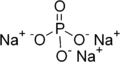 Trisodium phosphate


Medical Disclaimer: WikiMD is for informational purposes only and is not a substitute for professional medical advice. Content may be inaccurate or outdated and should not be used for diagnosis or treatment. Always consult your healthcare provider for medical decisions. Verify information with trusted sources such as CDC.gov and NIH.gov. By using this site, you agree that WikiMD is not liable for any outcomes related to its content. See full disclaimer.
Credits:Most images are courtesy of Wikimedia commons, and templates, categories Wikipedia, licensed under CC BY SA or similar.
Translate page: - East Asian
中文,
日本,
한국어,
South Asian
हिन्दी,
தமிழ்,
తెలుగు,
Urdu,
ಕನ್ನಡ,
Southeast Asian
Indonesian,
Vietnamese,
Thai,
မြန်မာဘာသာ,
বাংলা
European
español,
Deutsch,
français,
Greek,
português do Brasil,
polski,
română,
русский,
Nederlands,
norsk,
svenska,
suomi,
Italian
Middle Eastern & African
عربى,
Turkish,
Persian,
Hebrew,
Afrikaans,
isiZulu,
Kiswahili,
Other
Bulgarian,
Hungarian,
Czech,
Swedish,
മലയാളം,
मराठी,
ਪੰਜਾਬੀ,
ગુજરાતી,
Portuguese,
Ukrainian

