Trophoblast

The trophoblast is a layer of tissue on the outside of a mammalian blastocyst, supplying the embryo with nourishment and later forming a major part of the placenta. It is the first cell lineage to differentiate from the fertilized egg and plays a crucial role in implantation and interaction with the maternal endometrium.
Development[edit]

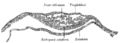
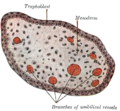
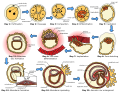
The trophoblast differentiates from the outer layer of the blastocyst during early embryogenesis. It surrounds the inner cell mass and the blastocoel, and it is responsible for the implantation of the embryo into the uterine wall. The trophoblast further differentiates into two layers: the cytotrophoblast and the syncytiotrophoblast.
Cytotrophoblast[edit]
The cytotrophoblast is the inner layer of the trophoblast, consisting of individual cells that retain their cell membranes. It serves as a source of new cells for the syncytiotrophoblast.
Syncytiotrophoblast[edit]
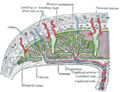
The syncytiotrophoblast is the outer layer of the trophoblast, which is a multinucleated cell mass that invades the uterine wall to establish nutrient circulation between the embryo and the mother. It secretes enzymes that allow the blastocyst to penetrate the uterine lining.
Function[edit]

The primary function of the trophoblast is to facilitate the exchange of nutrients and waste products between the mother and the developing embryo. It also produces hormones such as human chorionic gonadotropin (hCG), which is crucial for maintaining the corpus luteum and the early stages of pregnancy.
Pathology[edit]

Abnormalities in trophoblast development can lead to pregnancy complications such as preeclampsia, gestational trophoblastic disease, and ectopic pregnancy. In ectopic pregnancies, the trophoblast implants outside the uterine cavity, often in the fallopian tube, leading to potential rupture and hemorrhage.
Related pages[edit]
References[edit]
-
 Trophoblast
 -
 Trophoblast
 -
 Trophoblast
 -
 Human Embryogenesis


Medical Disclaimer: WikiMD is for informational purposes only and is not a substitute for professional medical advice. Content may be inaccurate or outdated and should not be used for diagnosis or treatment. Always consult your healthcare provider for medical decisions. Verify information with trusted sources such as CDC.gov and NIH.gov. By using this site, you agree that WikiMD is not liable for any outcomes related to its content. See full disclaimer.
Credits:Most images are courtesy of Wikimedia commons, and templates, categories Wikipedia, licensed under CC BY SA or similar.
Translate page: - East Asian
中文,
日本,
한국어,
South Asian
हिन्दी,
தமிழ்,
తెలుగు,
Urdu,
ಕನ್ನಡ,
Southeast Asian
Indonesian,
Vietnamese,
Thai,
မြန်မာဘာသာ,
বাংলা
European
español,
Deutsch,
français,
Greek,
português do Brasil,
polski,
română,
русский,
Nederlands,
norsk,
svenska,
suomi,
Italian
Middle Eastern & African
عربى,
Turkish,
Persian,
Hebrew,
Afrikaans,
isiZulu,
Kiswahili,
Other
Bulgarian,
Hungarian,
Czech,
Swedish,
മലയാളം,
मराठी,
ਪੰਜਾਬੀ,
ગુજરાતી,
Portuguese,
Ukrainian

