Medroxyprogesterone
Medroxyprogesterone is a type of progestin, a class of hormone that mimics the effects of naturally occurring progesterone. It is used in a variety of medical applications, including as a component of hormone replacement therapy, in the treatment of abnormal uterine bleeding, and as a method of birth control.
Medical Uses[edit]
Medroxyprogesterone is used in the treatment of a variety of medical conditions. It is often prescribed as part of hormone replacement therapy for menopausal women, to help alleviate symptoms such as hot flashes and vaginal dryness. It is also used to treat abnormal uterine bleeding, by helping to regulate the menstrual cycle.
In addition, medroxyprogesterone is used as a method of birth control. It is the active ingredient in the Depo-Provera injection, which provides protection against pregnancy for three months at a time.
Side Effects[edit]
Like all medications, medroxyprogesterone can cause side effects. These may include nausea, bloating, breast tenderness, and changes in menstrual bleeding patterns. In rare cases, it can cause more serious side effects such as blood clots, stroke, or heart attack.
Pharmacology[edit]
Medroxyprogesterone works by mimicking the effects of naturally occurring progesterone. It binds to progesterone receptors in the body, which helps to regulate the menstrual cycle and prevent ovulation.
History[edit]
Medroxyprogesterone was first synthesized in the 1950s, and has been used in medical practice since the 1960s. It is now one of the most commonly prescribed progestins in the world.
See Also[edit]
 | This medical article is a stub. You can help WikiMD by expanding the page. |

-
 Medroxyprogesterone
 -
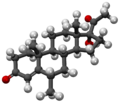 Medroxyprogesterone


Medical Disclaimer: WikiMD is for informational purposes only and is not a substitute for professional medical advice. Content may be inaccurate or outdated and should not be used for diagnosis or treatment. Always consult your healthcare provider for medical decisions. Verify information with trusted sources such as CDC.gov and NIH.gov. By using this site, you agree that WikiMD is not liable for any outcomes related to its content. See full disclaimer.
Credits:Most images are courtesy of Wikimedia commons, and templates, categories Wikipedia, licensed under CC BY SA or similar.
Translate page: - East Asian
中文,
日本,
한국어,
South Asian
हिन्दी,
தமிழ்,
తెలుగు,
Urdu,
ಕನ್ನಡ,
Southeast Asian
Indonesian,
Vietnamese,
Thai,
မြန်မာဘာသာ,
বাংলা
European
español,
Deutsch,
français,
Greek,
português do Brasil,
polski,
română,
русский,
Nederlands,
norsk,
svenska,
suomi,
Italian
Middle Eastern & African
عربى,
Turkish,
Persian,
Hebrew,
Afrikaans,
isiZulu,
Kiswahili,
Other
Bulgarian,
Hungarian,
Czech,
Swedish,
മലയാളം,
मराठी,
ਪੰਜਾਬੀ,
ગુજરાતી,
Portuguese,
Ukrainian

