Meniscus tear

Editor-In-Chief: Prab R Tumpati, MD
Obesity, Sleep & Internal medicine
Founder, WikiMD Wellnesspedia &
W8MD's weight loss doctor NYC
Philadelphia GLP-1 weight loss and GLP-1 clinic NYC
| Meniscus tear | |
|---|---|

| |
| Synonyms | Torn meniscus |
| Pronounce | N/A |
| Specialty | Orthopedic surgery |
| Symptoms | Knee pain, swelling, stiffness, locking of the knee |
| Complications | Osteoarthritis |
| Onset | Sudden or gradual |
| Duration | Can be chronic if untreated |
| Types | N/A |
| Causes | Trauma, degeneration |
| Risks | Athletic activities, age, obesity |
| Diagnosis | Physical examination, MRI |
| Differential diagnosis | Ligament injury, arthritis |
| Prevention | Strength training, flexibility exercises |
| Treatment | RICE, physical therapy, surgery |
| Medication | NSAIDs |
| Prognosis | Good with treatment |
| Frequency | Common |
| Deaths | N/A |


A Meniscus Tear is a common injury to the knee joint, specifically to the meniscus, which is a piece of cartilage that provides a cushion between the femur (thigh bone) and tibia (shin bone).
Causes[edit]
Meniscus tears can occur during activities that cause direct contact or pressure from a forced twist or rotation. A sudden pivot or turn, deep squatting, or heavy lifting can lead to injury. Aging also increases the risk of a meniscus tear, as the meniscus weakens and wears thin over time.
Symptoms[edit]
The most common symptoms of a meniscus tear include:
- Pain in the knee
- Swelling
- Difficulty bending and straightening the leg
- A tendency for your knee to get "stuck" or lock up
Diagnosis[edit]
A meniscus tear is diagnosed through a physical examination by a doctor, who will look for tenderness along the joint line where the meniscus sits. This may be accompanied by a MRI scan which can help to visualize the damaged meniscus.
Treatment[edit]
Treatment for a meniscus tear will depend on its size, type, and location. If the tear is small and on the outer edge of the meniscus, it may be allowed to heal on its own with the help of physical therapy. Larger or more centrally located tears may require surgery.
Prevention[edit]
While not all meniscus tears are preventable, you can reduce your risk by:
- Regularly exercising to strengthen the muscles around your knee
- Wearing shoes that fit well and are appropriate for your activity
- Using knee pads during activities that involve knee contact
Additional images[edit]
-
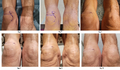 Meniscus tear
 -
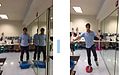 Meniscus tear
 -
 Meniscus tear


See Also[edit]


Medical Disclaimer: WikiMD is for informational purposes only and is not a substitute for professional medical advice. Content may be inaccurate or outdated and should not be used for diagnosis or treatment. Always consult your healthcare provider for medical decisions. Verify information with trusted sources such as CDC.gov and NIH.gov. By using this site, you agree that WikiMD is not liable for any outcomes related to its content. See full disclaimer.
Credits:Most images are courtesy of Wikimedia commons, and templates, categories Wikipedia, licensed under CC BY SA or similar.
Translate page: - East Asian
中文,
日本,
한국어,
South Asian
हिन्दी,
தமிழ்,
తెలుగు,
Urdu,
ಕನ್ನಡ,
Southeast Asian
Indonesian,
Vietnamese,
Thai,
မြန်မာဘာသာ,
বাংলা
European
español,
Deutsch,
français,
Greek,
português do Brasil,
polski,
română,
русский,
Nederlands,
norsk,
svenska,
suomi,
Italian
Middle Eastern & African
عربى,
Turkish,
Persian,
Hebrew,
Afrikaans,
isiZulu,
Kiswahili,
Other
Bulgarian,
Hungarian,
Czech,
Swedish,
മലയാളം,
मराठी,
ਪੰਜਾਬੀ,
ગુજરાતી,
Portuguese,
Ukrainian

