MyoD
MyoD (Myoblast Determination Protein 1) is a protein that plays a crucial role in the regulation of muscle differentiation. It is a member of the basic helix-loop-helix (bHLH) transcription factors family, which are important in the regulation of gene expression during the development of various tissues, including muscles. MyoD is specifically involved in the differentiation of myoblasts into mature muscle fibers, making it a key factor in muscle development and repair.
Function[edit]
MyoD functions by binding to E-boxes in the DNA to regulate the expression of target genes that are essential for muscle differentiation. Once MyoD is expressed in a precursor cell, it initiates a program of gene expression that leads to the cell's differentiation into a muscle fiber. This involves the activation of other muscle-specific genes, including those encoding myosin, actin, and muscle creatine kinase, which are critical components of the muscular structure and function.
Regulation[edit]
The expression and activity of MyoD are tightly regulated at multiple levels, including transcriptional, post-transcriptional, and post-translational modifications. Various signaling pathways, such as those mediated by growth factors, cytokines, and hormones, can influence the expression of MyoD. Additionally, interactions with other proteins, including both co-activators and co-repressors, modulate its activity to ensure the proper timing and extent of muscle differentiation.
Clinical Significance[edit]
Alterations in the expression or function of MyoD can lead to muscle disorders. For example, a reduction in MyoD activity has been associated with muscle wasting conditions, such as muscular dystrophy, where there is a progressive loss of muscle mass and strength. Conversely, the ectopic expression of MyoD in non-muscle cells has been explored as a potential therapeutic strategy for regenerating damaged muscle tissue.
Research Applications[edit]
MyoD is also widely used as a marker for muscle differentiation in research settings. The ability to induce non-muscle cells to differentiate into muscle cells by expressing MyoD has been a powerful tool in studying muscle development, regeneration, and the pathogenesis of muscle-related diseases. This has implications for developing novel therapeutic approaches for muscle wasting diseases and understanding the molecular mechanisms underlying muscle differentiation and repair.
See Also[edit]
 | This medical article is a stub. You can help WikiMD by expanding the page. |
MyoD[edit]
-
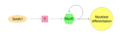 Proposed Stdb1-MyoD pathway
 -
 MyoD recruitment


Medical Disclaimer: WikiMD is for informational purposes only and is not a substitute for professional medical advice. Content may be inaccurate or outdated and should not be used for diagnosis or treatment. Always consult your healthcare provider for medical decisions. Verify information with trusted sources such as CDC.gov and NIH.gov. By using this site, you agree that WikiMD is not liable for any outcomes related to its content. See full disclaimer.
Credits:Most images are courtesy of Wikimedia commons, and templates, categories Wikipedia, licensed under CC BY SA or similar.
Translate page: - East Asian
中文,
日本,
한국어,
South Asian
हिन्दी,
தமிழ்,
తెలుగు,
Urdu,
ಕನ್ನಡ,
Southeast Asian
Indonesian,
Vietnamese,
Thai,
မြန်မာဘာသာ,
বাংলা
European
español,
Deutsch,
français,
Greek,
português do Brasil,
polski,
română,
русский,
Nederlands,
norsk,
svenska,
suomi,
Italian
Middle Eastern & African
عربى,
Turkish,
Persian,
Hebrew,
Afrikaans,
isiZulu,
Kiswahili,
Other
Bulgarian,
Hungarian,
Czech,
Swedish,
മലയാളം,
मराठी,
ਪੰਜਾਬੀ,
ગુજરાતી,
Portuguese,
Ukrainian

