Oripavine
Oripavine is a morphinan alkaloid that is used in the manufacture of pharmaceuticals. It is a natural product found in the Papaveraceae family of plants, including the opium poppy (Papaver somniferum) and the Iranian poppy (Papaver bracteatum).
Chemistry[edit]
Oripavine is structurally related to morphine and codeine, but has a different molecular structure. It is a morphinan alkaloid, which means it contains a morphinan skeleton with an additional hydroxyl group at the 6 position. This hydroxyl group is crucial for the bioactivity of oripavine.
Pharmacology[edit]
Oripavine has analgesic properties similar to those of other opioids. It acts as an agonist at the mu-opioid receptor, which is the primary site of action for the most commonly used opioids. Oripavine also has a high affinity for the delta-opioid receptor and the kappa-opioid receptor, although its effects at these sites are less well understood.
Medical uses[edit]
Oripavine is used in the manufacture of a number of pharmaceuticals. It is a precursor in the synthesis of several semi-synthetic opioids, including buprenorphine, etorphine, and diprenorphine. These drugs are used for the treatment of pain, opioid dependence, and in veterinary medicine.
Legal status[edit]
In many countries, oripavine is a controlled substance due to its potential for abuse and addiction. In the United States, it is classified as a Schedule II controlled substance under the Controlled Substances Act.
See also[edit]

This WikiMD article can only be edited by registered and verified editors. You can log in or register.
Oripavine[edit]
-
 Diagram of bridged oripavine structure
 -
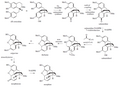 Pathway of morphine biosynthesis
 -
 Caviar served at Bob Bob Ricard, Soho, London


Medical Disclaimer: WikiMD is for informational purposes only and is not a substitute for professional medical advice. Content may be inaccurate or outdated and should not be used for diagnosis or treatment. Always consult your healthcare provider for medical decisions. Verify information with trusted sources such as CDC.gov and NIH.gov. By using this site, you agree that WikiMD is not liable for any outcomes related to its content. See full disclaimer.
Credits:Most images are courtesy of Wikimedia commons, and templates, categories Wikipedia, licensed under CC BY SA or similar.
Translate page: - East Asian
中文,
日本,
한국어,
South Asian
हिन्दी,
தமிழ்,
తెలుగు,
Urdu,
ಕನ್ನಡ,
Southeast Asian
Indonesian,
Vietnamese,
Thai,
မြန်မာဘာသာ,
বাংলা
European
español,
Deutsch,
français,
Greek,
português do Brasil,
polski,
română,
русский,
Nederlands,
norsk,
svenska,
suomi,
Italian
Middle Eastern & African
عربى,
Turkish,
Persian,
Hebrew,
Afrikaans,
isiZulu,
Kiswahili,
Other
Bulgarian,
Hungarian,
Czech,
Swedish,
മലയാളം,
मराठी,
ਪੰਜਾਬੀ,
ગુજરાતી,
Portuguese,
Ukrainian

