Parotidectomy
Parotidectomy is a surgical procedure performed to remove the parotid gland, which is one of the major salivary glands. The procedure is most commonly performed due to neoplasms (tumors), which are growths of abnormal cells. These neoplasms can be benign (non-cancerous) or malignant (cancerous).
Indications[edit]
The primary indication for a parotidectomy is the presence of a neoplasm in the parotid gland. Other indications may include chronic or recurrent infections, Sjögren's syndrome, and other non-neoplastic diseases of the parotid gland.
Procedure[edit]
The procedure is performed under general anesthesia. The surgeon makes an incision in the skin over the parotid gland and carefully dissects the gland from the surrounding tissues. The facial nerve, which runs through the parotid gland, is identified and preserved. The gland is then removed and the wound is closed with sutures.
Complications[edit]
Possible complications of a parotidectomy include facial nerve injury, Frey's syndrome, and salivary fistula. Facial nerve injury can result in facial weakness or paralysis. Frey's syndrome, also known as gustatory sweating, is a condition in which sweating occurs on the cheek, near the removed parotid gland, during meals. A salivary fistula is an abnormal connection between the salivary gland and the skin.
Prognosis[edit]
The prognosis following a parotidectomy depends on the underlying reason for the surgery. In cases of benign neoplasms, the prognosis is generally good. For malignant neoplasms, the prognosis can vary widely depending on the specific type and stage of cancer.
See also[edit]

This WikiMD article can only be edited by registered and verified editors. You can log in or register.
-
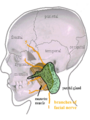 Diagram of the parotid gland
 -
 Massive tumor of the parotid gland
 -
 After surgical removal of massive parotid tumor


Medical Disclaimer: WikiMD is for informational purposes only and is not a substitute for professional medical advice. Content may be inaccurate or outdated and should not be used for diagnosis or treatment. Always consult your healthcare provider for medical decisions. Verify information with trusted sources such as CDC.gov and NIH.gov. By using this site, you agree that WikiMD is not liable for any outcomes related to its content. See full disclaimer.
Credits:Most images are courtesy of Wikimedia commons, and templates, categories Wikipedia, licensed under CC BY SA or similar.
Translate page: - East Asian
中文,
日本,
한국어,
South Asian
हिन्दी,
தமிழ்,
తెలుగు,
Urdu,
ಕನ್ನಡ,
Southeast Asian
Indonesian,
Vietnamese,
Thai,
မြန်မာဘာသာ,
বাংলা
European
español,
Deutsch,
français,
Greek,
português do Brasil,
polski,
română,
русский,
Nederlands,
norsk,
svenska,
suomi,
Italian
Middle Eastern & African
عربى,
Turkish,
Persian,
Hebrew,
Afrikaans,
isiZulu,
Kiswahili,
Other
Bulgarian,
Hungarian,
Czech,
Swedish,
മലയാളം,
मराठी,
ਪੰਜਾਬੀ,
ગુજરાતી,
Portuguese,
Ukrainian

