Peasant foods
Peasant foods are dishes that were traditionally eaten by peasants, or the working class, in various cultures around the world. These foods are often made from inexpensive, readily available ingredients and are typically hearty and filling.
History[edit]
Peasant foods have a long history, dating back to the earliest civilizations. They were typically made from ingredients that were readily available and could be easily grown or raised by the peasants themselves. This often included grains, legumes, vegetables, and occasionally meat or fish.
Characteristics[edit]
Peasant foods are often simple, hearty dishes that are designed to be filling and nutritious. They are typically made from inexpensive, readily available ingredients and are often cooked in large quantities to feed a large family or community. Many peasant foods are also designed to be easily preserved, either through drying, smoking, pickling, or fermenting, so that they can be stored and eaten throughout the year.
Examples[edit]
There are many examples of peasant foods from around the world. In Italy, for example, polenta and pasta were traditionally peasant foods. In China, congee and noodles were common peasant dishes. In Mexico, tortillas and beans were staple peasant foods. And in Russia, borscht and pierogi were typical peasant dishes.
Influence on Modern Cuisine[edit]
Peasant foods have had a significant influence on modern cuisine. Many dishes that were once considered peasant foods have become popular in high-end restaurants and are now considered delicacies. This is often due to their rich, hearty flavors and the skill and time required to prepare them.
See Also[edit]

-
Acquacotta soup
-
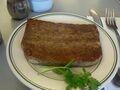 Plate of scrapple
 -
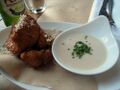 Fried cauliflower with agliata
 -
Pot-au-feu
-
Hominy (maize)
-
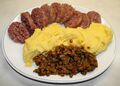 Cotechino served with polenta and lentils
 -
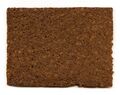 Pumpernickel


Medical Disclaimer: WikiMD is for informational purposes only and is not a substitute for professional medical advice. Content may be inaccurate or outdated and should not be used for diagnosis or treatment. Always consult your healthcare provider for medical decisions. Verify information with trusted sources such as CDC.gov and NIH.gov. By using this site, you agree that WikiMD is not liable for any outcomes related to its content. See full disclaimer.
Credits:Most images are courtesy of Wikimedia commons, and templates, categories Wikipedia, licensed under CC BY SA or similar.
Translate page: - East Asian
中文,
日本,
한국어,
South Asian
हिन्दी,
தமிழ்,
తెలుగు,
Urdu,
ಕನ್ನಡ,
Southeast Asian
Indonesian,
Vietnamese,
Thai,
မြန်မာဘာသာ,
বাংলা
European
español,
Deutsch,
français,
Greek,
português do Brasil,
polski,
română,
русский,
Nederlands,
norsk,
svenska,
suomi,
Italian
Middle Eastern & African
عربى,
Turkish,
Persian,
Hebrew,
Afrikaans,
isiZulu,
Kiswahili,
Other
Bulgarian,
Hungarian,
Czech,
Swedish,
മലയാളം,
मराठी,
ਪੰਜਾਬੀ,
ગુજરાતી,
Portuguese,
Ukrainian


.JPG)