Ranbezolid
Ranbezolid is an oxazolidinone antibiotic that is currently under development. It is a synthetic antibacterial agent that has demonstrated significant in vitro and in vivo activity against a broad spectrum of Gram-positive bacteria, including methicillin-resistant Staphylococcus aureus (MRSA) and vancomycin-resistant enterococci (VRE).
Mechanism of Action[edit]
Ranbezolid inhibits protein synthesis in bacteria by binding to the ribosome and blocking the formation of a functional 70S-initiation complex. This is a critical step in the bacterial translation process and is therefore a point of attack for several antibiotic classes.
Pharmacokinetics[edit]
Ranbezolid is well absorbed after oral administration and has a bioavailability of approximately 90%. It is extensively distributed to tissues and fluids, including lung tissue and cerebrospinal fluid. The drug is primarily metabolized by the liver and excreted in the urine and feces.
Clinical Trials[edit]
Ranbezolid has undergone Phase 2 clinical trials for the treatment of complicated skin and skin structure infections (cSSSI) caused by Gram-positive bacteria, including MRSA and VRE. The results of these trials have shown that ranbezolid is well tolerated and effective in the treatment of these infections.
Side Effects[edit]
The most common side effects of ranbezolid include nausea, vomiting, diarrhea, and headache. Less common side effects include dizziness, insomnia, and rash.
See Also[edit]
- Oxazolidinone
- Antibiotic
- Methicillin-resistant Staphylococcus aureus
- Vancomycin-resistant enterococci

This WikiMD article can only be edited by registered and verified editors. You can log in or register.
Ranbezolid[edit]
-
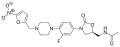 Ranbezolid structure


Medical Disclaimer: WikiMD is for informational purposes only and is not a substitute for professional medical advice. Content may be inaccurate or outdated and should not be used for diagnosis or treatment. Always consult your healthcare provider for medical decisions. Verify information with trusted sources such as CDC.gov and NIH.gov. By using this site, you agree that WikiMD is not liable for any outcomes related to its content. See full disclaimer.
Credits:Most images are courtesy of Wikimedia commons, and templates, categories Wikipedia, licensed under CC BY SA or similar.
Translate page: - East Asian
中文,
日本,
한국어,
South Asian
हिन्दी,
தமிழ்,
తెలుగు,
Urdu,
ಕನ್ನಡ,
Southeast Asian
Indonesian,
Vietnamese,
Thai,
မြန်မာဘာသာ,
বাংলা
European
español,
Deutsch,
français,
Greek,
português do Brasil,
polski,
română,
русский,
Nederlands,
norsk,
svenska,
suomi,
Italian
Middle Eastern & African
عربى,
Turkish,
Persian,
Hebrew,
Afrikaans,
isiZulu,
Kiswahili,
Other
Bulgarian,
Hungarian,
Czech,
Swedish,
മലയാളം,
मराठी,
ਪੰਜਾਬੀ,
ગુજરાતી,
Portuguese,
Ukrainian

