Remeglurant
Remeglurant is a drug that acts as a selective antagonist for the metabotropic glutamate receptor subtype 5 (mGluR5). It was developed by Novartis and has been researched for potential use in the treatment of various central nervous system disorders, including anxiety, depression, and Parkinson's disease.
Pharmacology[edit]
Remeglurant is a non-competitive antagonist at the mGluR5 receptor, which is a type of glutamate receptor that is found in various regions of the brain. By blocking the action of glutamate at this receptor, remeglurant can modulate the activity of the neural circuitry that is involved in mood and motor control.
Clinical Trials[edit]
Remeglurant has been tested in several clinical trials for its potential therapeutic effects. In preclinical studies, it showed promise as a treatment for anxiety and depression. However, in human trials, the results have been mixed. Some studies have found that remeglurant can reduce symptoms of anxiety and depression, while others have found no significant effect.
Potential Uses[edit]
Despite the mixed results in clinical trials, remeglurant continues to be researched for its potential uses in treating various central nervous system disorders. In addition to anxiety and depression, it has also been investigated for its potential use in treating Parkinson's disease. The drug's ability to modulate neural circuitry involved in motor control could potentially help to alleviate some of the motor symptoms associated with this disease.
Side Effects[edit]
Like all drugs, remeglurant has the potential to cause side effects. These can include nausea, dizziness, and headache. However, these side effects are generally mild and tend to diminish over time with continued use of the drug.
See Also[edit]

-
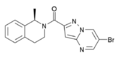 Remeglurant


Medical Disclaimer: WikiMD is for informational purposes only and is not a substitute for professional medical advice. Content may be inaccurate or outdated and should not be used for diagnosis or treatment. Always consult your healthcare provider for medical decisions. Verify information with trusted sources such as CDC.gov and NIH.gov. By using this site, you agree that WikiMD is not liable for any outcomes related to its content. See full disclaimer.
Credits:Most images are courtesy of Wikimedia commons, and templates, categories Wikipedia, licensed under CC BY SA or similar.
Translate page: - East Asian
中文,
日本,
한국어,
South Asian
हिन्दी,
தமிழ்,
తెలుగు,
Urdu,
ಕನ್ನಡ,
Southeast Asian
Indonesian,
Vietnamese,
Thai,
မြန်မာဘာသာ,
বাংলা
European
español,
Deutsch,
français,
Greek,
português do Brasil,
polski,
română,
русский,
Nederlands,
norsk,
svenska,
suomi,
Italian
Middle Eastern & African
عربى,
Turkish,
Persian,
Hebrew,
Afrikaans,
isiZulu,
Kiswahili,
Other
Bulgarian,
Hungarian,
Czech,
Swedish,
മലയാളം,
मराठी,
ਪੰਜਾਬੀ,
ગુજરાતી,
Portuguese,
Ukrainian

