Sclera
The Sclera is the white outer layer of the eye. It is a tough, fibrous tissue that extends from the cornea (the clear front section of the eye) to the optic nerve at the back of the eye. The sclera provides the eye with most of its structural strength.
Structure[edit]
The sclera is made up of several layers, including the episclera, the stroma, and the lamina fusca. The episclera is the outermost layer and contains blood vessels that nourish the sclera. The stroma is the middle, thickest layer and is made up of densely packed collagen fibers. The lamina fusca is the innermost layer and contains a large amount of pigment cells.
Function[edit]
The primary function of the sclera is to provide protection for the delicate structures inside the eye. It also serves as an attachment point for the extraocular muscles that control eye movement. In addition, the sclera helps to maintain the shape of the eye and provides resistance to internal and external forces that could cause damage.
Clinical significance[edit]
Diseases and conditions that can affect the sclera include scleritis, episcleritis, and scleral icterus. Scleritis and episcleritis are inflammatory conditions that can cause redness, pain, and vision problems. Scleral icterus is a condition in which the sclera becomes yellow due to an excess of bilirubin in the blood, often as a result of liver disease.
See also[edit]
References[edit]
External links[edit]

This WikiMD article can only be edited by registered and verified editors. You can log in or register.
Sclera[edit]
-
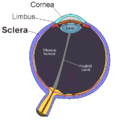 Sclera
 -
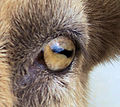 Closeup of goat eye
 -
 A cow's eye
 -
 Western Lowland Gorilla


.jpg)

Medical Disclaimer: WikiMD is for informational purposes only and is not a substitute for professional medical advice. Content may be inaccurate or outdated and should not be used for diagnosis or treatment. Always consult your healthcare provider for medical decisions. Verify information with trusted sources such as CDC.gov and NIH.gov. By using this site, you agree that WikiMD is not liable for any outcomes related to its content. See full disclaimer.
Credits:Most images are courtesy of Wikimedia commons, and templates, categories Wikipedia, licensed under CC BY SA or similar.
Translate page: - East Asian
中文,
日本,
한국어,
South Asian
हिन्दी,
தமிழ்,
తెలుగు,
Urdu,
ಕನ್ನಡ,
Southeast Asian
Indonesian,
Vietnamese,
Thai,
မြန်မာဘာသာ,
বাংলা
European
español,
Deutsch,
français,
Greek,
português do Brasil,
polski,
română,
русский,
Nederlands,
norsk,
svenska,
suomi,
Italian
Middle Eastern & African
عربى,
Turkish,
Persian,
Hebrew,
Afrikaans,
isiZulu,
Kiswahili,
Other
Bulgarian,
Hungarian,
Czech,
Swedish,
മലയാളം,
मराठी,
ਪੰਜਾਬੀ,
ગુજરાતી,
Portuguese,
Ukrainian

