Toothbrush
A toothbrush is a small brush which has long handle; used to clean teeth. Tooth brush is usually made of plastic fibers, but can also be made with small branch of certain trees like the neem tree.
History[edit]
The modern toothbrush as we know it today was not invented until 1938. The early forms of the toothbrush have been in existence since 3000 BC. Ancient civilizations used a “chew stick,” which was a thin twig with a frayed end.
Types[edit]
Toothbrushes come in many shakes and sizes including those that are finger toothbrush, electric toothbrush and manual toothbrush.

Benefits[edit]
In removing plaque and other soft debris from the teeth, toothbrushes become contaminated with bacteria, blood, saliva, oral debris, and toothpaste. Because of this contamination, a common recommendation is to rinse one’s toothbrush thoroughly with tap water following brushing.
Tips[edit]
- Brush your teeth twice a day with fluoride toothpaste.
- Floss regularly.
- Visit your dentist routinely for a checkup and cleaning. Tell the dentist about any medical conditions you have and medications you take.
- Eat a well-balanced diet.
- Quit smoking. Smoking increases your risk for gum disease.
- Do not share toothbrushes. Toothbrushes can have germs on them even after rinsing that could raise the risk of infection, especially for people with immune suppression.
- After brushing, rinse your toothbrush with tap water until it is completely clean, let it air-dry, and store it in an upright position. If more than one brush is stored in the same holder, do not let them touch each other.
- You do not need to soak toothbrushes in disinfecting solutions or mouthwash, which may actually spread germs under the right conditions.
- You do not need to use dishwashers, microwaves, or ultraviolet devices to disinfect toothbrushes. These methods may damage the toothbrush.
- Avoid covering toothbrushes or storing them in closed containers, which can cause the growth of bacteria.
- Replace your toothbrush every 3 to 4 months, or sooner if the bristles look worn out. This is because a worn-out toothbrush may not work as well, not because it might carry more germs.
-
Patented in 1985, curved bristles allow for safe and easy brushing of teeth and gingival sulcus.
-
A child being shown how to use a toothbrush.
-
 'Indexo' finger toothbrush, New York, United States, 1901–1919. It is made entirely of rubber, which has been shaped to fit over the index finger.
 -
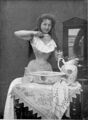 A photo from 1899 showing the use of a toothbrush.
 -
The horsehair toothbrush was said to have been used by Napoleon Bonaparte
-
Three plastic toothbrushes
-
Various electric toothbrush heads


This WikiMD article can only be edited by registered and verified editors. You can log in or register.
| Dentistry involving supporting structures of teeth (Periodontology) | ||||||||
|---|---|---|---|---|---|---|---|---|
|

Medical Disclaimer: WikiMD is for informational purposes only and is not a substitute for professional medical advice. Content may be inaccurate or outdated and should not be used for diagnosis or treatment. Always consult your healthcare provider for medical decisions. Verify information with trusted sources such as CDC.gov and NIH.gov. By using this site, you agree that WikiMD is not liable for any outcomes related to its content. See full disclaimer.
Credits:Most images are courtesy of Wikimedia commons, and templates, categories Wikipedia, licensed under CC BY SA or similar.
Translate page: - East Asian
中文,
日本,
한국어,
South Asian
हिन्दी,
தமிழ்,
తెలుగు,
Urdu,
ಕನ್ನಡ,
Southeast Asian
Indonesian,
Vietnamese,
Thai,
မြန်မာဘာသာ,
বাংলা
European
español,
Deutsch,
français,
Greek,
português do Brasil,
polski,
română,
русский,
Nederlands,
norsk,
svenska,
suomi,
Italian
Middle Eastern & African
عربى,
Turkish,
Persian,
Hebrew,
Afrikaans,
isiZulu,
Kiswahili,
Other
Bulgarian,
Hungarian,
Czech,
Swedish,
മലയാളം,
मराठी,
ਪੰਜਾਬੀ,
ગુજરાતી,
Portuguese,
Ukrainian


.jpg)

.jpg)