Insulin receptor
Insulin receptor is a transmembrane receptor that is activated by insulin, IGF-I, IGF-II and belongs to the large class of tyrosine kinase receptors. Metabolically, the insulin receptor plays a key role in the regulation of glucose homeostasis, a functional process that under degenerate conditions may result in a range of clinical manifestations including diabetes and cancer.
Structure[edit]
The insulin receptor is a heterotetrameric protein consisting of two α and two β subunits. The α and β subunits are coded by a single gene, INSR, and are joined by disulfide bonds, a mechanism parallel to that of its ligand, insulin.
Function[edit]
The insulin receptor is expressed in various tissues including liver, muscle, and adipose tissue. The primary function of the insulin receptor is its ability to regulate glucose uptake. A secondary function of the insulin receptor is to regulate cell growth and differentiation, which it does through activation of mitogenic signaling pathways.
Clinical significance[edit]
Mutations in this gene have been associated with insulin resistance, obesity, hyperinsulinemia, polycystic ovary syndrome, and type 2 diabetes. Insulin resistance and type 2 diabetes are both conditions characterized by a decrease in the effectiveness of insulin in inducing the uptake of glucose from the blood, leading to hyperglycemia and a variety of other metabolic disturbances.
See also[edit]
References[edit]

This WikiMD article can only be edited by registered and verified editors. You can log in or register.
-
Colour coded schematic of the insulin receptor
-
Insulin receptor conformation change upon binding
-
Ligand-saturated cryoEM IR structure
-
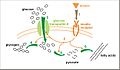 Insulin glucose metabolism
 -
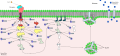 Signal transduction diagram: Insulin


Medical Disclaimer: WikiMD is for informational purposes only and is not a substitute for professional medical advice. Content may be inaccurate or outdated and should not be used for diagnosis or treatment. Always consult your healthcare provider for medical decisions. Verify information with trusted sources such as CDC.gov and NIH.gov. By using this site, you agree that WikiMD is not liable for any outcomes related to its content. See full disclaimer.
Credits:Most images are courtesy of Wikimedia commons, and templates, categories Wikipedia, licensed under CC BY SA or similar.
Translate page: - East Asian
中文,
日本,
한국어,
South Asian
हिन्दी,
தமிழ்,
తెలుగు,
Urdu,
ಕನ್ನಡ,
Southeast Asian
Indonesian,
Vietnamese,
Thai,
မြန်မာဘာသာ,
বাংলা
European
español,
Deutsch,
français,
Greek,
português do Brasil,
polski,
română,
русский,
Nederlands,
norsk,
svenska,
suomi,
Italian
Middle Eastern & African
عربى,
Turkish,
Persian,
Hebrew,
Afrikaans,
isiZulu,
Kiswahili,
Other
Bulgarian,
Hungarian,
Czech,
Swedish,
മലയാളം,
मराठी,
ਪੰਜਾਬੀ,
ગુજરાતી,
Portuguese,
Ukrainian


