Metam sodium
Metam Sodium is a pesticide used primarily for the control of insects, diseases, weeds, and other pests. It is applied to the soil before planting crops and is used on a variety of crops including fruits, vegetables, turf, flowers, and ornamental plants.
Uses[edit]
Metam Sodium is used as a soil fumigant, herbicide, insecticide, nematicide, fungicide, and germicide. It is used to control a wide range of soil-borne diseases and pests including nematodes, fungi, weeds, and insects. It is also used in the treatment of sewage and industrial waste.
Health Effects[edit]
Exposure to Metam Sodium can cause a variety of health effects. These include irritation of the eyes, skin, and respiratory tract, nausea, vomiting, diarrhea, headache, dizziness, shortness of breath, and chest pain. In severe cases, exposure can lead to pulmonary edema, convulsions, coma, and death.
Environmental Effects[edit]
Metam Sodium is highly toxic to aquatic life and can cause significant harm to the environment if it is not handled and disposed of properly. It can contaminate groundwater and can have long-term effects on soil health and biodiversity.
Regulation[edit]
In the United States, Metam Sodium is regulated by the Environmental Protection Agency (EPA). The EPA sets limits on the amount of Metam Sodium that can be used and requires that it be applied by certified applicators.
See Also[edit]

This WikiMD article can only be edited by registered and verified editors. You can log in or register.
-
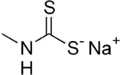 Metam sodium
 -
 Metam sodium


Medical Disclaimer: WikiMD is for informational purposes only and is not a substitute for professional medical advice. Content may be inaccurate or outdated and should not be used for diagnosis or treatment. Always consult your healthcare provider for medical decisions. Verify information with trusted sources such as CDC.gov and NIH.gov. By using this site, you agree that WikiMD is not liable for any outcomes related to its content. See full disclaimer.
Credits:Most images are courtesy of Wikimedia commons, and templates, categories Wikipedia, licensed under CC BY SA or similar.
Translate page: - East Asian
中文,
日本,
한국어,
South Asian
हिन्दी,
தமிழ்,
తెలుగు,
Urdu,
ಕನ್ನಡ,
Southeast Asian
Indonesian,
Vietnamese,
Thai,
မြန်မာဘာသာ,
বাংলা
European
español,
Deutsch,
français,
Greek,
português do Brasil,
polski,
română,
русский,
Nederlands,
norsk,
svenska,
suomi,
Italian
Middle Eastern & African
عربى,
Turkish,
Persian,
Hebrew,
Afrikaans,
isiZulu,
Kiswahili,
Other
Bulgarian,
Hungarian,
Czech,
Swedish,
മലയാളം,
मराठी,
ਪੰਜਾਬੀ,
ગુજરાતી,
Portuguese,
Ukrainian

