Mujaddara
Mujaddara is a traditional Middle Eastern dish, primarily consisting of lentils, rice and onions. The dish is popular across the Arab world and is also found in the cuisines of Israel, Lebanon, Jordan, and Syria. Mujaddara is often garnished with yogurt or a salad of lettuce, tomatoes, and cucumbers.
Etymology[edit]
The term "Mujaddara" is derived from the Arabic word mudajjan, which means "pockmarked" or "spotted". This refers to the appearance of the dish, which is speckled with lentils among the rice.
History[edit]
Mujaddara is believed to have originated in the Middle East over a thousand years ago. It is mentioned in the Kitab al-Tabikh, a collection of 13th-century recipes from Baghdad. The dish was traditionally consumed during periods of fasting and is still popular during the Lent season among Christian communities in the Middle East.
Preparation[edit]
Mujaddara is made by cooking lentils and rice together, then topping the mixture with caramelized onions. Some variations of the dish also include bulgur instead of rice, and additional ingredients such as pine nuts or yogurt. The dish is typically seasoned with cumin, coriander, and black pepper.
Nutrition[edit]
Mujaddara is a nutritious dish, high in protein due to the lentils, and providing complex carbohydrates from the rice or bulgur. The onions provide additional nutritional benefits, including vitamin C and fiber.
Cultural Significance[edit]
Mujaddara is often considered a "poor man's dish" due to its simple and inexpensive ingredients. However, its rich flavors and nutritional value have made it a staple in many Middle Eastern households, regardless of socioeconomic status.
See Also[edit]
| Middle Eastern cuisine | ||||||||
|---|---|---|---|---|---|---|---|---|
|

-
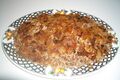 Mujaddara


Medical Disclaimer: WikiMD is for informational purposes only and is not a substitute for professional medical advice. Content may be inaccurate or outdated and should not be used for diagnosis or treatment. Always consult your healthcare provider for medical decisions. Verify information with trusted sources such as CDC.gov and NIH.gov. By using this site, you agree that WikiMD is not liable for any outcomes related to its content. See full disclaimer.
Credits:Most images are courtesy of Wikimedia commons, and templates, categories Wikipedia, licensed under CC BY SA or similar.
Translate page: - East Asian
中文,
日本,
한국어,
South Asian
हिन्दी,
தமிழ்,
తెలుగు,
Urdu,
ಕನ್ನಡ,
Southeast Asian
Indonesian,
Vietnamese,
Thai,
မြန်မာဘာသာ,
বাংলা
European
español,
Deutsch,
français,
Greek,
português do Brasil,
polski,
română,
русский,
Nederlands,
norsk,
svenska,
suomi,
Italian
Middle Eastern & African
عربى,
Turkish,
Persian,
Hebrew,
Afrikaans,
isiZulu,
Kiswahili,
Other
Bulgarian,
Hungarian,
Czech,
Swedish,
മലയാളം,
मराठी,
ਪੰਜਾਬੀ,
ગુજરાતી,
Portuguese,
Ukrainian

