Prunella vulgaris
Prunella vulgaris, commonly known as self-heal, heal-all, or allheal, is a herbaceous plant in the family Lamiaceae. It is native to Europe, Asia, and North America, and it is present elsewhere, including New Zealand and Australia, as an introduced species.
Description[edit]
Prunella vulgaris is a low-growing perennial plant with creeping stems up to 45 cm long, which bear two-lipped, tubular purple flowers. The leaves are opposite, ovate, and have a serrated margin. The plant prefers moist soils and can be found in a variety of habitats, including grasslands, open forests, and disturbed areas.
Uses[edit]
Prunella vulgaris has a long history of use in traditional medicine. The plant has been used to treat a variety of ailments, including wounds, inflammation, and gastrointestinal disorders. Modern research has investigated its potential for treating diseases such as cancer and herpes.
Culinary uses[edit]
The young leaves and stems of Prunella vulgaris can be eaten raw in salads or cooked as a vegetable. The plant has a slightly bitter taste and is rich in vitamins and minerals.
Medicinal uses[edit]
In traditional medicine, Prunella vulgaris is often used as a remedy for inflammation and wounds. The plant is known to contain a variety of bioactive compounds, including phenolic acids, flavonoids, and tannins, which have antioxidant, anti-inflammatory, and antimicrobial properties.
Cultivation[edit]
Prunella vulgaris is a hardy plant that can tolerate a range of conditions. It prefers moist, well-drained soil and can grow in both full sun and partial shade. The plant is propagated by seeds, cuttings, or division.
See also[edit]
| Medicinal plants | ||||||||
|---|---|---|---|---|---|---|---|---|
This medicinal plants related article is a stub.
|
 | This Lamiaceae article is a stub. You can help WikiMD by expanding the page. |
-
 Prunella vulgaris
 -
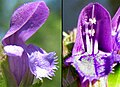 Prunella vulgaris flowers
 -
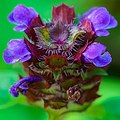 Kleine Braunelle, Blüte
 -
 Common self-heal leaf


_--_leaf.JPG)

Medical Disclaimer: WikiMD is for informational purposes only and is not a substitute for professional medical advice. Content may be inaccurate or outdated and should not be used for diagnosis or treatment. Always consult your healthcare provider for medical decisions. Verify information with trusted sources such as CDC.gov and NIH.gov. By using this site, you agree that WikiMD is not liable for any outcomes related to its content. See full disclaimer.
Credits:Most images are courtesy of Wikimedia commons, and templates, categories Wikipedia, licensed under CC BY SA or similar.
Translate page: - East Asian
中文,
日本,
한국어,
South Asian
हिन्दी,
தமிழ்,
తెలుగు,
Urdu,
ಕನ್ನಡ,
Southeast Asian
Indonesian,
Vietnamese,
Thai,
မြန်မာဘာသာ,
বাংলা
European
español,
Deutsch,
français,
Greek,
português do Brasil,
polski,
română,
русский,
Nederlands,
norsk,
svenska,
suomi,
Italian
Middle Eastern & African
عربى,
Turkish,
Persian,
Hebrew,
Afrikaans,
isiZulu,
Kiswahili,
Other
Bulgarian,
Hungarian,
Czech,
Swedish,
മലയാളം,
मराठी,
ਪੰਜਾਬੀ,
ગુજરાતી,
Portuguese,
Ukrainian

